
T
Rank #2527
DATA ANALYSIS FREEMIUM SELF HOSTED #5 in Data Analysis

TiDB Review — Distributed SQL Database Scalability

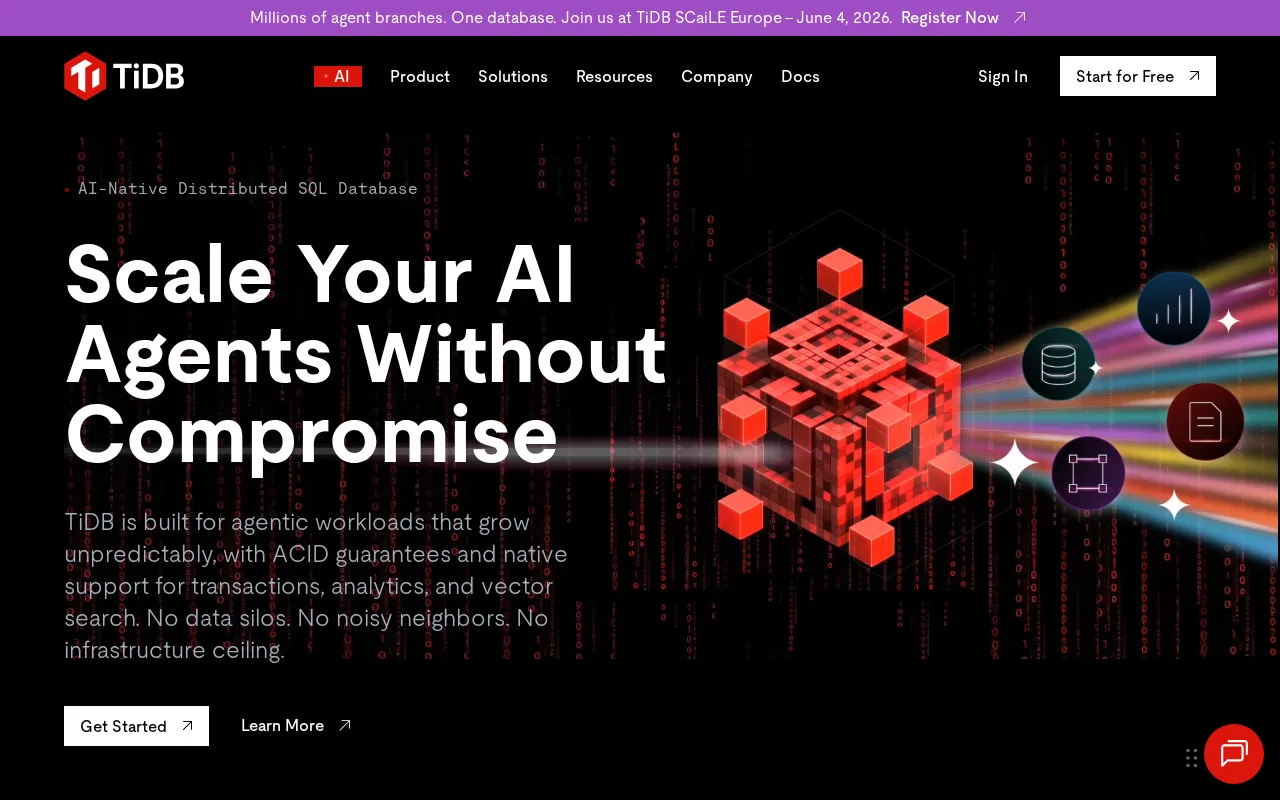
TiDB is a distributed SQL database that combines horizontal scalability with strong consistency and high availability.
4.9 / 10
Visit Tidb
7.8
Volvenix Verdict
AI-powered editorial review
Tidb
TiDB is a powerful open-source distributed database suited for scalable, consistent SQL workloads.
PROS
  • Strong horizontal scalability with no downtime
  • Combines OLTP and OLAP in one database
  • Open-source with active community
  • Strong consistency with distributed transactions
  • High availability and fault tolerance
CONS
  • Requires significant operational expertise to manage
  • Ecosystem and tooling less mature than commercial alternatives

Is Tidb Right for You?

A quick checklist to help you decide.

You need a distributed SQL database that scales horizontally without downtime
You need a simple, single-node database with minimal management
You want strong consistency guarantees across distributed nodes
Free-tier limits are a blocker for your development or testing needs
Your team requires hybrid transactional and analytical processing capabilities
You require a fully managed cloud database service without self-hosting

Ideal for: Database engineers and backend teams needing scalable, strongly consistent distributed SQL databases for mixed OLTP and OLAP workloads.

Less suited for: Small teams or projects without dedicated database expertise or those requiring simple, single-node databases with minimal operational overhead.

Bottom line: The need for a horizontally scalable, strongly consistent distributed SQL database with hybrid transactional and analytical processing.

Editorial Review AI-generated
TiDB excels in providing a horizontally scalable and strongly consistent distributed SQL database that supports both transactional and analytical workloads. Its architecture allows seamless scaling without downtime, making it suitable for growing businesses. The open-source nature and hybrid SQL/NoSQL capabilities are strong advantages. However, it requires some expertise to deploy and manage effectively, and its ecosystem is less mature than some commercial alternatives. Best suited for teams with database engineering resources aiming for scalable, fault-tolerant SQL solutions.

AI-assessed from 2 sources.

Pros & Cons

Pros

Highly scalable distributed SQL database
Strong consistency with distributed transactions
Open-source with active development
Supports hybrid OLTP and OLAP workloads
High availability with fault tolerance

Cons

Requires advanced database and infrastructure knowledge major
Workaround: Use managed TiDB Cloud service for easier operations
Smaller ecosystem compared to commercial cloud databases moderate
Who Is It For & What Can It Do
Best For
Developer / Engineer Data Scientist / Analyst Product Manager Advanced curve
AI Capabilities
Data Analysis
Key Features
Horizontal Scalability
Scale out by adding nodes without downtime
Strong Consistency
Distributed ACID transactions with Raft consensus
Hybrid OLTP and OLAP
Supports transactional and analytical queries
MySQL Compatibility
Compatible with MySQL protocol and tools
Cloud Managed Service
Optional managed TiDB Cloud by PingCAP
Best Use Cases
Scalable OLTP applications Real-time analytics on transactional data Hybrid transactional and analytical processing Cloud-native database deployments High availability database clusters
Available Platforms
Inputs & Outputs
Textinput Textoutput
Supported Languages
English
Security & Compliance
Compliance Standards
GDPR
Privacy · EU
API & Developer Tools
Pricing Plans

Free

Open-source self-hosted

Free
 
  • Full open-source database
  • Community support

TiDB is open-source and free to use with optional paid managed services available from PingCAP.

Price Range
Free $0–$0
Support Channels
Did you find this page helpful?
Frequently Asked Questions
What is this tool?
TiDB is an open-source distributed SQL database designed for scalable, strongly consistent OLTP and OLAP workloads.
How much does it cost?
TiDB is free to use as open-source software; managed cloud services have separate pricing.
Does it have a free plan?
Yes, the open-source version is free to self-host without usage limits.
What integrations does it support?
TiDB supports MySQL-compatible clients and tools; integrations depend on ecosystem tools.
Who is it best for?
It is best for teams needing scalable, strongly consistent distributed SQL databases with hybrid workload support.
User Reviews

No reviews yet. Be the first to review Tidb!

Write a Review
Discussion
No discussions yet. Start the conversation!
0 tools selected
Compare Now →
Tidb Visit Tool