 Volvenix
PhonicMind vs Moises
AI-enhanced independent comparison — features, pros, cons, pricing and rankings.
 ChatGPT
  Claude
  Gemini
  Midjourney
  DALL-E
  Stable Diffusion
  Notion AI
  Canva
Canva  Grammarly
  GitHub Copilot
  ElevenLabs
  Perplexity
  Runway
  Synthesia
  Fireflies.ai
  Hugging Face Hub
| Dimension | PhonicMind | Moises |
|---|---|---|
| Accuracy & Reliability | — | |
| Ease of Use | — | |
| Features & Capability | — | |
| Value for Money | — | |
| Performance & Speed | — | |
| Popularity & Adoption | — |
Who each tool serves best — and when to pick the other one.
Musicians, producers, and content creators who need to isolate vocals or instruments for remixing, practice, or sampling.
- You need to isolate vocals or instruments from existing songs quickly and easily
- You want to create karaoke tracks or practice with separated stems
- Your team requires straightforward audio separation without complex software
Users seeking full DAW functionality or those needing real-time audio separation during live performances.
- You need a full digital audio workstation for music production
- Free-tier limits are a blocker for your frequent or large-scale audio separation needs
- You require real-time or live audio separation capabilities
The quality and ease of extracting clean audio stems from mixed tracks.
Musicians, podcasters, and content creators who need quick and easy audio stem separation without complex software.
- You want to isolate vocals or instruments quickly for practice or remixing.
- You need a mobile-friendly tool for on-the-go audio separation.
- Your team requires basic stem extraction without complex DAW software.
Professional audio engineers requiring advanced mixing tools or users needing unlimited free usage and high-res exports.
- You need professional-grade audio editing beyond stem separation.
- Free-tier limits on track length and exports block your workflow.
- You require offline or self-hosted audio processing capabilities.
Effectiveness and ease of use in isolating audio stems from mixed tracks.
A canonical comparison across capabilities common to this category. Vendor-specific extras appear below in "Highlighted Features".
| Capability | PhonicMind | Moises |
|---|---|---|
|
API Access
Programmatic access via documented API
|
✓ | — |
|
Free Tier Available
Usable without payment (with usage limits)
|
✓ | ✓ |
Each tool's marketing-listed features. Where a feature appears under one tool but not the other, it usually reflects how the vendor describes their product — not a definitive capability gap.
- Vocal Separation — Isolate vocals from mixed audio tracks
- Instrument Separation — Extract drums, bass, and other instruments
- Audio Format Support — Supports MP3, WAV, and other common formats
- Batch processing — Process multiple files at once
- Audio Separation — Isolate vocals, drums, bass, and other instruments
- Pitch and Speed Control — Adjust pitch and tempo of separated tracks
- Mobile App — Available on iOS and Android for on-the-go use
- Cloud Processing — Fast, server-side audio separation
- User Collaboration — Team plan supports collaboration features
- Accurate separation of vocals and instruments
- User-friendly web interface
- Quick processing of audio files
- Supports multiple audio formats
- No software installation required
- High-quality audio stem separation
- Intuitive and accessible user interface
- Mobile apps for iOS and Android
- Cloud processing with fast turnaround
- Additional features like pitch and speed control
- Separation quality can degrade with complex mixes
- Limited free tier usage
- No real-time or live audio separation
- Free plan limits track length and export quality
- No advanced audio editing or mixing tools
- No public API for integration
- Creating karaoke tracks
- Remixing songs with isolated stems
- Practicing instruments with backing tracks
- Sampling vocals or instruments for new productions
- Audio post-production for content creators
- Practice singing or instrumentals with isolated vocals
- Create karaoke tracks by removing vocals
- Produce remixes by separating stems
- Podcasters removing background music or noise
- Music educators demonstrating individual parts
Where each tool runs — web, mobile, desktop, browser extension, API.
Natural languages each tool generates and understands. Primary languages are listed first.
What each tool can accept (input) and produce (output) — text, image, audio, video, code.
PhonicMind offers a free tier with limited usage and paid plans for higher quality and more features.
-
Free
Free
Offers a free tier with basic features and paid subscriptions for higher quality exports and longer tracks.
-
Free
Free -
Pro
popular
$20.00/mo -
Team
$30.00/mo
Regulatory frameworks each tool claims compliance with (HIPAA, SOC 2, GDPR, etc.).
None listed.
Third-party audits and certifications that verify security controls.
No certifications listed.
Vendor-published numbers each tool highlights — usage scale, breadth, and operational stats. Different tools track different metrics, so direct row-by-row comparison usually isn't meaningful.
- Audio separation speed Fast processing
- Track length limit 5 minutes (free tier) minutes
- Export quality Standard (free), High (Pro)
Who each tool is positioned for — primary audience first.
How you can reach support — email, live chat, phone, community, docs.
- Email primary
- Email primary
How each tool is classified in the Volvenix catalog.
These vocabulary domains are managed in our catalog but not yet exposed at the tool level. We're tracking them for future expansion of this comparison.
- Encryption Types — AES-256, ChaCha20, RSA-2048, and similar at-rest/in-transit cipher families.
- Encryption Contexts — where encryption is applied (data at rest, in transit, end-to-end).
- Plan-tier Model Mapping — which AI models are available on which pricing tier (currently only the model list is tracked, not the per-plan availability).
- What is this tool?
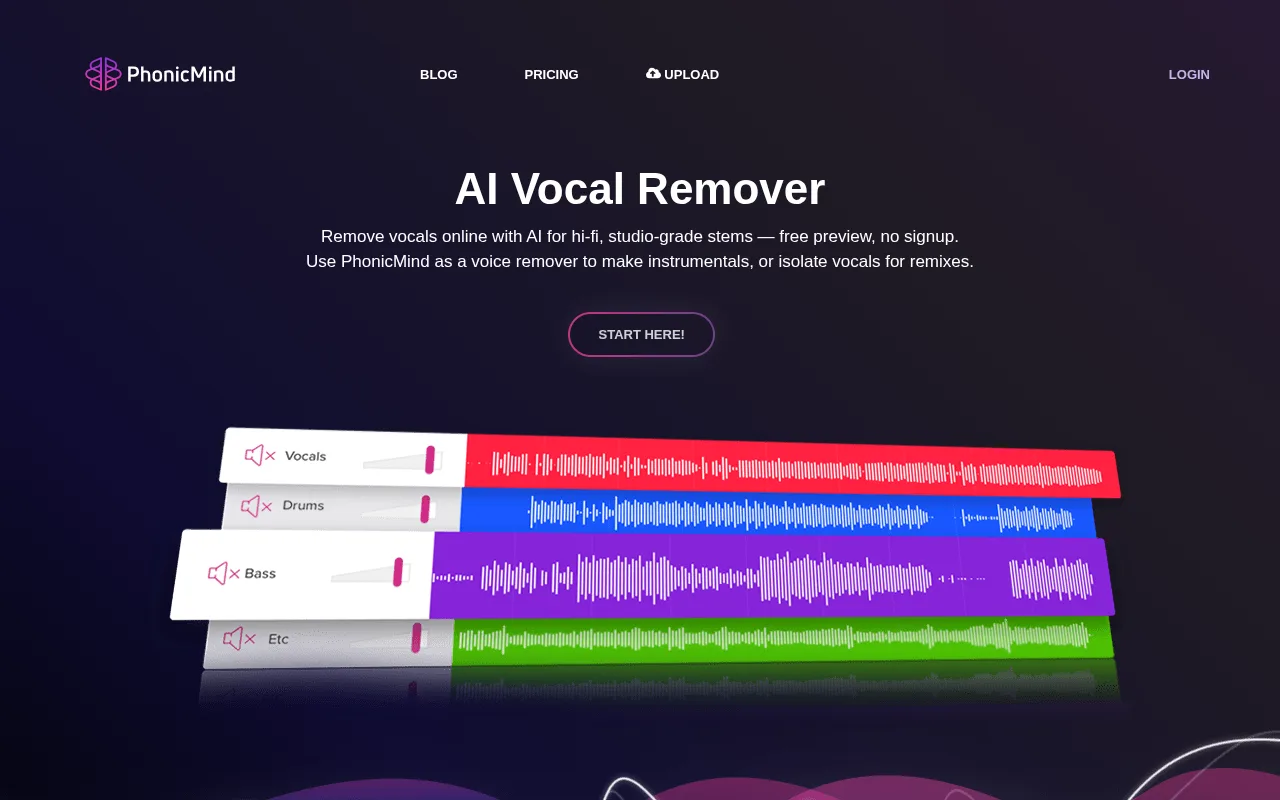
- PhonicMind is an online tool that separates vocals and instruments from audio tracks.
- How much does it cost?
- PhonicMind offers a free tier with limited usage and paid plans for higher quality and more features.
- Does it have a free plan?
- Yes, PhonicMind provides a free plan with limited audio separation credits.
- What integrations does it support?
- PhonicMind does not currently offer integrations or a public API.
- Who is it best for?
- It is best for musicians, producers, and content creators needing quick and easy audio stem separation.
- What is this tool?
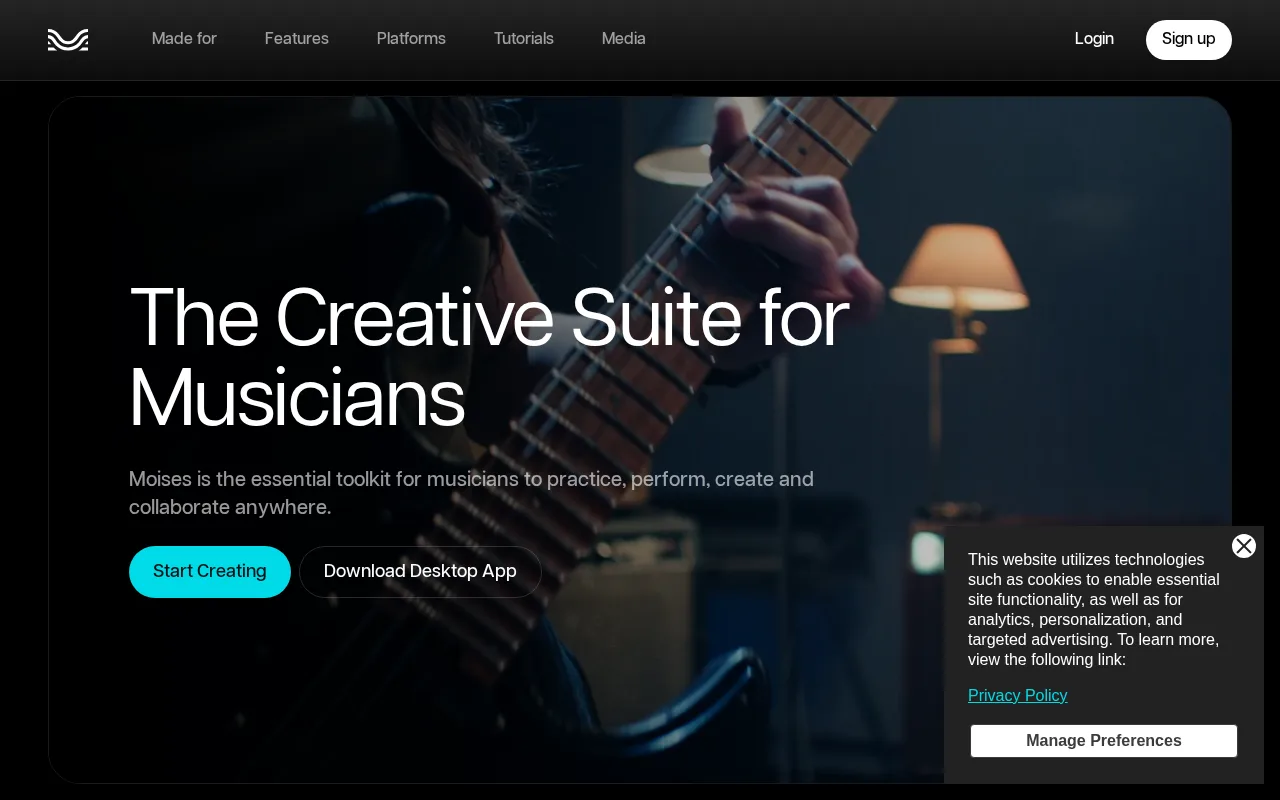
- Moises is an audio separation tool that isolates vocals and instruments from mixed tracks.
- How much does it cost?
- Moises offers a free plan with basic features and paid subscriptions starting at $20/month.
- Does it have a free plan?
- Yes, Moises provides a free tier with limited track length and export quality.
- What integrations does it support?
- Moises currently does not offer public integrations or APIs.
- Who is it best for?
- It is best for musicians, podcasters, and content creators needing quick audio stem separation.
| Info | PhonicMind | Moises |
|---|---|---|
| Pricing | Freemium | Freemium |
| Category | AI Voice & Speech | AI Voice & Speech |
| Deployment | Cloud | Cloud |
| Learning Curve | Beginner | Beginner |
| Free Plan | ✓ | ✓ |
| AI Agent | ✗ | ✗ |
| Autonomy | Assistant | Assistant |
| Risk Tier | Low | Low |
| BYO API Key | ✗ | — |
| Local Models | ✗ | — |
| Fine-tuning | ✗ | — |
 Acapella Extractor
 Splitter.ai
 AudioSourceRE
 LALAL.AI
Moises and PhonicMind both offer freemium pricing models and have similar overall scores, with Moises at 5.1/10 and PhonicMind at 5.2/10. Moises focuses on features like vocal and instrument separation, practice tools, and integration with music apps, making it suitable for musicians and educators. PhonicMind specializes primarily in AI-driven stem separation for remixing and karaoke purposes, emphasizing quick processing and ease of use for DJs and producers.
ⓘ How Volvenix scores work
Scores are computed by Volvenix — not supplied by the vendors, and not third-party benchmark results. Each 0–10 dimension (Overall, Features, Usability, Support, Pricing) is a directional estimate aggregated from catalog signals — editorial cataloguing, content depth, engagement, and provider-reputation indicators — so treat them as a starting point, not a lab result.
Confidence reflects how complete the underlying data is for both tools; lower confidence means fewer signals were available, not a worse tool. We never accept payment for rankings or scores. More about how Volvenix works →