 Volvenix
Google Cloud Vision API vs NoahFace
AI-enhanced independent comparison — features, pros, cons, pricing and rankings.
 ChatGPT
  Claude
  Gemini
  Midjourney
  DALL-E
  Stable Diffusion
  Notion AI
  Canva
Canva  Grammarly
  GitHub Copilot
  ElevenLabs
  Perplexity
  Runway
  Synthesia
  Fireflies.ai
  Hugging Face Hub

| Dimension | Google Cloud Vision API | NoahFace |
|---|---|---|
| Accuracy & Reliability | ||
| Ease of Use | ||
| Features & Capability | ||
| Value for Money | ||
| Performance & Speed | ||
| Popularity & Adoption |
Who each tool serves best — and when to pick the other one.
Developers and businesses needing scalable, accurate face detection and image analysis APIs.
- You need to integrate face detection into your applications quickly and reliably.
- You want a cloud-based API with broad image recognition capabilities beyond just faces.
- Your team requires scalable, production-ready image analysis with Google Cloud support.
Non-technical users or teams with strict budget constraints and no cloud infrastructure experience.
- You need a fully free solution without usage limits or costs beyond a free tier.
- Free-tier limits are a blocker for your high-volume image processing needs.
- You require an on-premise or self-hosted image recognition solution.
The quality and scalability of Google’s pre-trained image recognition models.
Security teams and developers in enterprises needing scalable, accurate face detection and identity verification.
- You need scalable face detection integrated into identity and access workflows.
- You want a solution tailored for security teams with developer-friendly APIs.
- Your team requires enterprise-level accuracy and verification capabilities.
Small businesses or individuals seeking low-cost or free face detection solutions with transparent pricing.
- You need a low-cost or free face detection tool for small projects or startups.
- Free-tier limits are a blocker for your usage needs due to lack of public pricing.
- You require a fully open-source or self-hosted face detection solution.
Enterprise-grade face detection accuracy combined with flexible API and web interface integration.
A canonical comparison across capabilities common to this category. Vendor-specific extras appear below in "Highlighted Features".
| Capability | Google Cloud Vision API | NoahFace |
|---|---|---|
|
API Access
Programmatic access via documented API
|
✓ | — |
|
Free Tier Available
Usable without payment (with usage limits)
|
✓ | — |
| Feature | Google Cloud Vision API | NoahFace |
|---|---|---|
| Face detection | Detects faces and facial attributes in images | Accurate detection of faces in images and video streams |
Each tool's marketing-listed features. Where a feature appears under one tool but not the other, it usually reflects how the vendor describes their product — not a definitive capability gap.
- Optical Character Recognition (OCR) — Extracts text from images in multiple languages
- Label Detection — Identifies objects and entities within images
- Landmark Detection — Recognizes popular natural and man-made landmarks
- Logo Detection — Detects brand logos in images
- Face Verification — Verify identities by comparing facial features
- Face Identification — Identify individuals from a database of known faces
- Web Interface — User-friendly web UI for managing workflows
- API integration — Supports integration into custom identity workflows
- High accuracy face detection and OCR
- Seamless integration with Google Cloud
- Pre-trained models simplify usage
- Supports multiple image analysis types
- Scalable for large workloads
- High accuracy in face detection and identity verification
- Flexible API and web interface for integration
- Designed specifically for enterprise security workflows
- Supports verification and identification beyond detection
- Pricing can escalate with high volume
- Requires developer knowledge to implement
- No offline or on-premise option
- No publicly available pricing or free tier
- Limited information on API availability and documentation
- No mobile app or offline deployment options
- Face detection for security and authentication
- Text extraction from scanned documents
- Image content moderation
- Product and logo recognition
- Automated metadata tagging for images
- Enterprise identity verification
- Access control systems
- Security team workflow integration
- Visitor management
- Employee attendance tracking
The underlying AI models each tool runs on. Model details show on hover.
No models confirmed.
Natural languages each tool generates and understands. Primary languages are listed first.
What each tool can accept (input) and produce (output) — text, image, audio, video, code.
Free tier offers limited monthly usage; paid plans charge per image processed with volume discounts available.
-
Free
Free
Pricing is enterprise-based and available upon request; no public pricing or free tiers listed.
—
Regulatory frameworks each tool claims compliance with (HIPAA, SOC 2, GDPR, etc.).
Vendor-published numbers each tool highlights — usage scale, breadth, and operational stats. Different tools track different metrics, so direct row-by-row comparison usually isn't meaningful.
- Free tier units 1000 units/month
No metrics published.
Who each tool is positioned for — primary audience first.
How you can reach support — email, live chat, phone, community, docs.
- Documentation primary visit ↗
- Email primary
How each tool is classified in the Volvenix catalog.
These vocabulary domains are managed in our catalog but not yet exposed at the tool level. We're tracking them for future expansion of this comparison.
- Encryption Types — AES-256, ChaCha20, RSA-2048, and similar at-rest/in-transit cipher families.
- Encryption Contexts — where encryption is applied (data at rest, in transit, end-to-end).
- Plan-tier Model Mapping — which AI models are available on which pricing tier (currently only the model list is tracked, not the per-plan availability).
- What is this tool?
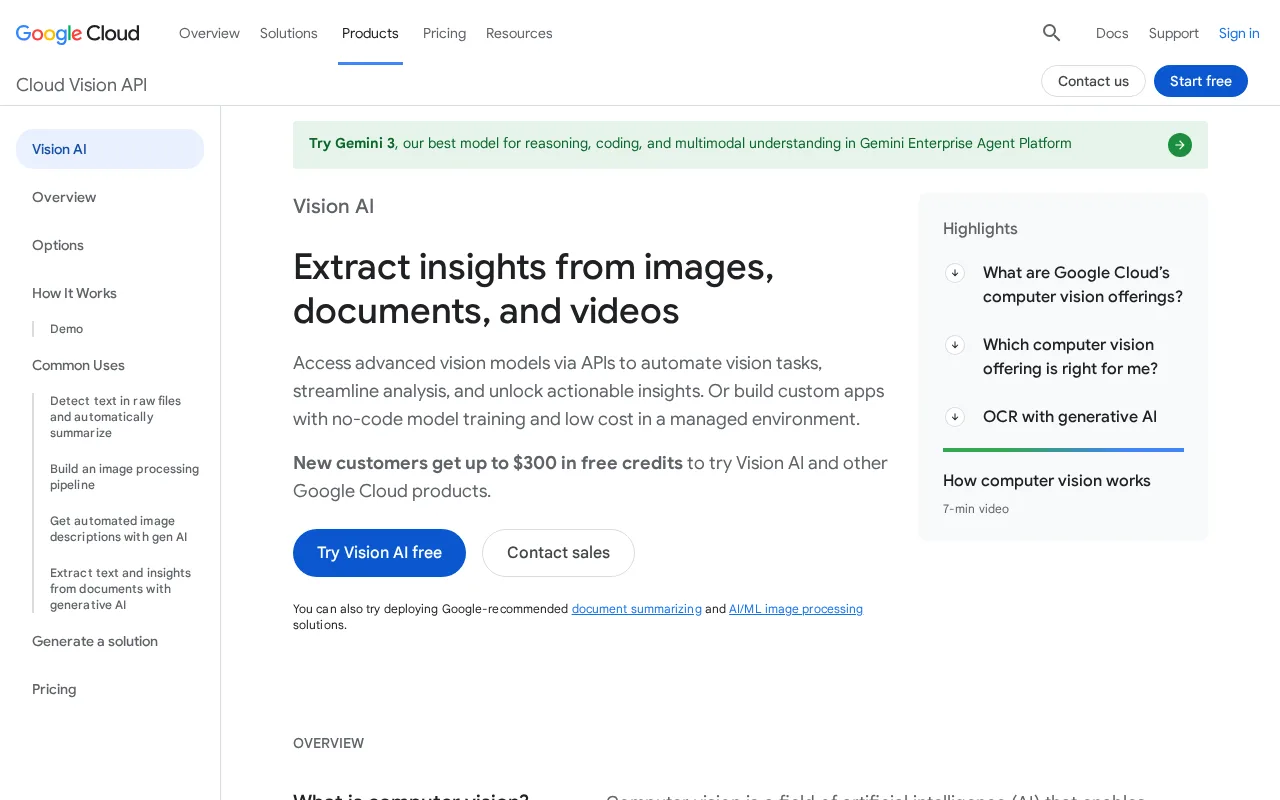
- Google Cloud Vision API is a cloud service that analyzes images to detect faces, text, objects, and more.
- How much does it cost?
- It offers a free tier with limited usage; beyond that, pricing is based on the number of images processed.
- Does it have a free plan?
- Yes, there is a free tier allowing up to 1000 units per month at no cost.
- What integrations does it support?
- It integrates with Google Cloud services and can be accessed via REST API and client libraries.
- Who is it best for?
- Developers and businesses needing scalable, accurate image analysis and face detection capabilities.
- What is this tool?
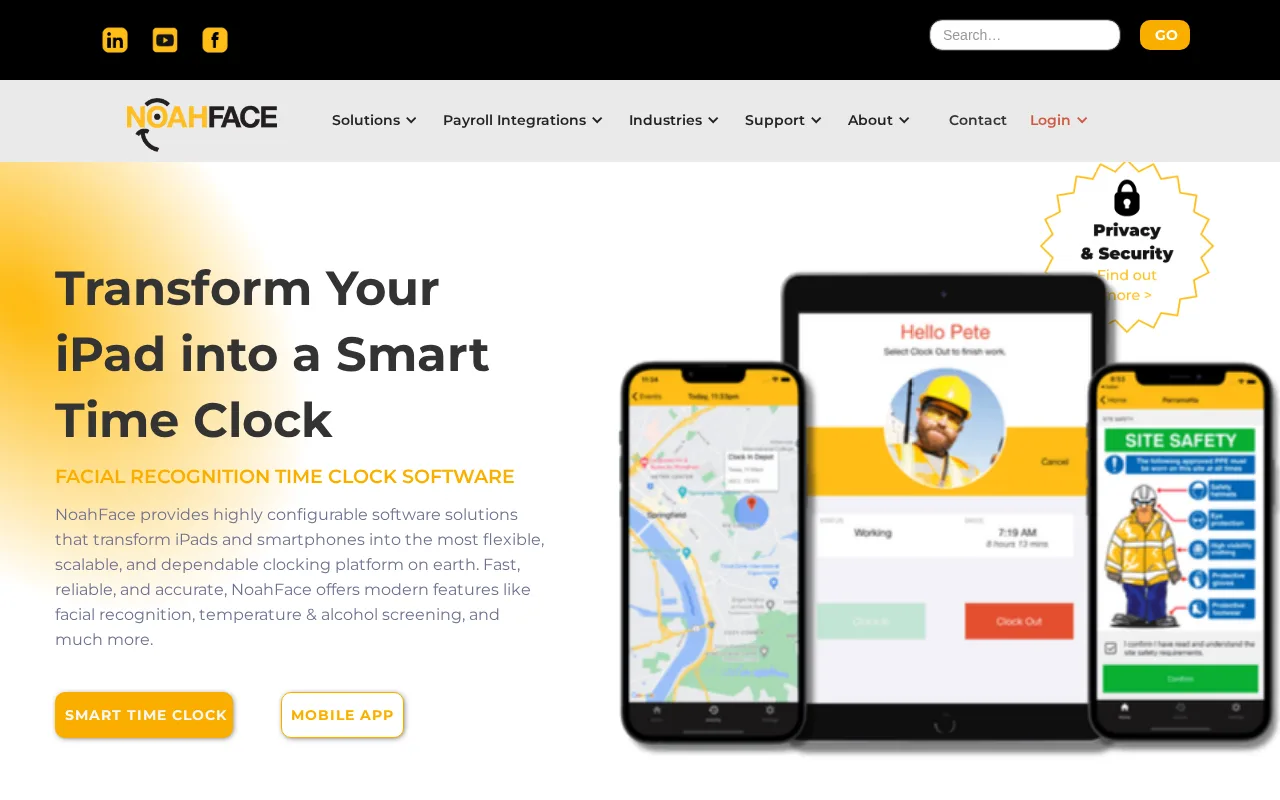
- NoahFace is a face detection and identity verification platform designed for enterprise security workflows.
- How much does it cost?
- Pricing is enterprise-based and available upon request; no public pricing is listed.
- Does it have a free plan?
- NoahFace does not offer a free plan or trial publicly.
- What integrations does it support?
- It supports API integration and a web interface for embedding into identity workflows.
- Who is it best for?
- It is best suited for enterprise security teams and developers needing robust face detection and verification.
| Info | Google Cloud Vision API | NoahFace |
|---|---|---|
| Pricing | Freemium | Enterprise |
| Category | Multimodal AI (Text, Image, Audio & Video) | Cybersecurity AI |
| Deployment | Cloud | Cloud |
| Learning Curve | Intermediate | Intermediate |
| Free Plan | ✓ | ✗ |
| AI Agent | ✓ | ✓ |
| Autonomy | Assistant | Assistant |
| Risk Tier | Low | Medium |
 MediaPipe
 AWS Rekognition
 SimpleCV
 Aware Knomi
 VidiQ AI Video Optimization
 Daon IdentityX
Google Cloud Vision API leads NoahFace overall (5.5 vs 5.1). Google Cloud Vision API also offers better value for money. The best choice depends on your specific workflow, team size, and budget.
ⓘ How Volvenix scores work
Scores are computed by Volvenix — not supplied by the vendors, and not third-party benchmark results. Each 0–10 dimension (Overall, Features, Usability, Support, Pricing) is a directional estimate aggregated from catalog signals — editorial cataloguing, content depth, engagement, and provider-reputation indicators — so treat them as a starting point, not a lab result.
Confidence reflects how complete the underlying data is for both tools; lower confidence means fewer signals were available, not a worse tool. We never accept payment for rankings or scores. More about how Volvenix works →