 Volvenix
SuperAnnotate vs Prodi.gy
AI-enhanced independent comparison — features, pros, cons, pricing and rankings.
 ChatGPT
  Claude
  Gemini
  Midjourney
  DALL-E
  Stable Diffusion
  Notion AI
  Canva
Canva  Grammarly
  GitHub Copilot
  ElevenLabs
  Perplexity
  Runway
  Synthesia
  Fireflies.ai
  Hugging Face Hub

| Dimension | SuperAnnotate | Prodi.gy |
|---|---|---|
| Accuracy & Reliability | ||
| Ease of Use | ||
| Features & Capability | ||
| Value for Money | ||
| Performance & Speed | ||
| Popularity & Adoption |
Who each tool serves best — and when to pick the other one.
AI and ML teams needing collaborative, scalable annotation tools for computer vision datasets.
- You need to manage large-scale computer vision annotation projects collaboratively.
- You want AI-assisted tools to speed up dataset labeling and quality control.
- Your team requires integrated project management for annotation workflows.
Individuals or small teams with limited budgets or simple annotation needs may find it too costly or complex.
- You need a low-cost or free annotation tool for small or individual projects.
- Free-tier limits are a blocker for your annotation volume or team size.
- You require simple annotation without advanced project management features.
The platform’s ability to combine AI-assisted annotation with collaborative project management.
Developers and data scientists who need fast, customizable annotation tools integrated with Python workflows.
- You need a fast annotation tool for text, images, or audio data in ML projects.
- You want customizable workflows tailored to your specific labeling tasks.
- Your team requires seamless Python integration for annotation pipelines.
Non-technical users or teams requiring free plans, extensive integrations, or public APIs should consider alternatives.
- You need a free or freemium plan for casual or low-volume use.
- Free-tier limits are a blocker for your annotation needs.
- You require a public API or extensive third-party integrations.
Speed and flexibility of annotation combined with Python integration.
A canonical comparison across capabilities common to this category. Vendor-specific extras appear below in "Highlighted Features".
| Capability | SuperAnnotate | Prodi.gy |
|---|---|---|
|
API Access
Programmatic access via documented API
|
✓ | — |
|
Free Trial
Time-limited paid-plan trial
|
— | ✓ |
Each tool's marketing-listed features. Where a feature appears under one tool but not the other, it usually reflects how the vendor describes their product — not a definitive capability gap.
- AI-assisted annotation — Automates labeling to speed up dataset creation
- Collaborative project management — Manage teams, tasks, and workflows in one platform
- Quality Control — Review and validate annotations for accuracy
- Multi-format annotation support — Supports bounding boxes, polygons, segmentation, and more
- Multi-modal annotation — Supports text, image, and audio annotation
- Custom Workflows — Create and modify annotation workflows to fit needs
- Python integration — Seamless integration with Python scripts and ML pipelines
- Collaboration Features — Team support and multi-user annotation
- Active learning support — Supports active learning workflows to improve labeling efficiency
- AI-assisted annotation accelerates labeling
- Strong collaboration and project management
- Quality control ensures dataset accuracy
- Supports multiple annotation types for vision
- Scalable for enterprise teams
- Fast annotation speeds improve productivity
- Highly customizable workflows for varied tasks
- Strong Python integration for ML pipelines
- Supports multiple data types: text, images, audio
- Developer-focused with extensibility options
- Pricing is not publicly available and targets enterprises
- No free or trial plans limit initial evaluation
- Steeper learning curve for new users
- No free plan available
- Lacks a public API for external integrations
- Computer vision dataset annotation
- Autonomous vehicle training data preparation
- Medical imaging annotation projects
- Retail product image labeling
- Quality control for AI training data
- Training data annotation for NLP models
- Image labeling for computer vision projects
- Audio transcription and labeling
- Custom dataset creation for machine learning
- Active learning annotation workflows
No third-party integrations confirmed.
Where each tool runs — web, mobile, desktop, browser extension, API.
No platforms confirmed.
Natural languages each tool generates and understands. Primary languages are listed first.
What each tool can accept (input) and produce (output) — text, image, audio, video, code.
Pricing is custom and enterprise-focused, requiring contact with sales for details.
-
Free
Free -
Enterprise
Custom pricing · 14-day trial
Prodi.gy offers paid subscription plans with no free tier, focusing on professional users needing advanced annotation features.
-
Free Trial
Free · 7-day trial -
Pro
popular
$390.00/mo -
Team
$780.00/mo
Regulatory frameworks each tool claims compliance with (HIPAA, SOC 2, GDPR, etc.).
Vendor-published numbers each tool highlights — usage scale, breadth, and operational stats. Different tools track different metrics, so direct row-by-row comparison usually isn't meaningful.
- Annotation speed Up to 5x faster
- Supported annotation types 6+
- Annotation Speed High
Who each tool is positioned for — primary audience first.
No specific audience listed.
How each tool is classified in the Volvenix catalog.
These vocabulary domains are managed in our catalog but not yet exposed at the tool level. We're tracking them for future expansion of this comparison.
- Encryption Types — AES-256, ChaCha20, RSA-2048, and similar at-rest/in-transit cipher families.
- Encryption Contexts — where encryption is applied (data at rest, in transit, end-to-end).
- Plan-tier Model Mapping — which AI models are available on which pricing tier (currently only the model list is tracked, not the per-plan availability).
- What is this tool?
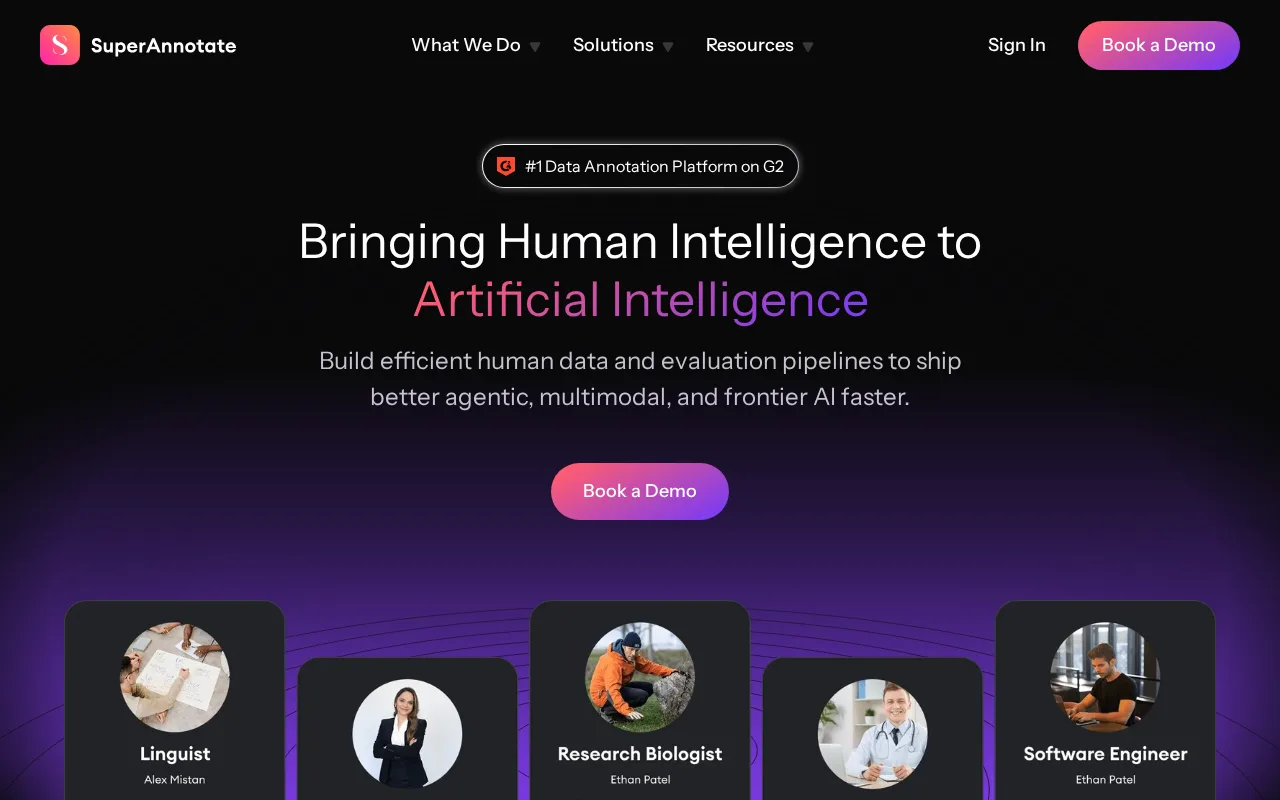
- SuperAnnotate is a platform for AI teams to annotate and manage computer vision datasets with AI-assisted tools.
- How much does it cost?
- Pricing is enterprise-focused and available by contacting SuperAnnotate sales.
- Does it have a free plan?
- No, SuperAnnotate does not offer a free or trial plan publicly.
- What integrations does it support?
- SuperAnnotate offers API access for integration with external workflows.
- Who is it best for?
- It is best suited for enterprise AI teams needing scalable, collaborative annotation solutions.
- What is this tool?
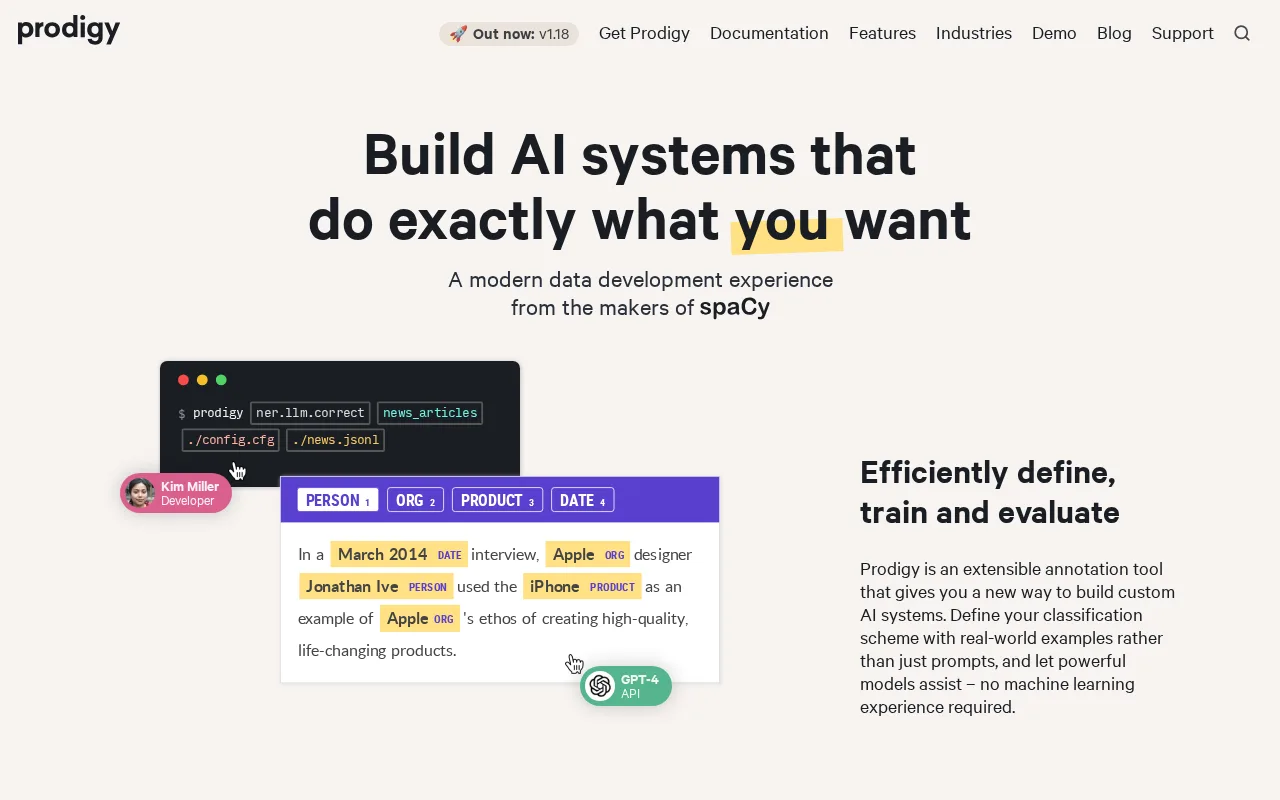
- Prodi.gy is a browser-based annotation tool for labeling text, images, and audio data to support machine learning workflows.
- How much does it cost?
- Prodi.gy offers paid subscription plans with pricing starting at several hundred dollars per month, plus a limited free trial.
- Does it have a free plan?
- No, Prodi.gy does not have a free plan but provides a limited free trial for evaluation.
- What integrations does it support?
- It integrates tightly with Python but does not offer a public API or third-party SaaS integrations.
- Who is it best for?
- It is best suited for developers and data scientists needing fast, customizable annotation tools integrated with Python.
| Info | SuperAnnotate | Prodi.gy |
|---|---|---|
| Pricing | Enterprise | Paid |
| Category | Data Labeling & Annotation | Data Labeling & Annotation |
| Deployment | Cloud | Cloud |
| Learning Curve | Intermediate | — |
| Free Plan | ✗ | ✗ |
| AI Agent | ✗ | ✗ |
| Autonomy | Copilot | Assistant |
| Risk Tier | Medium | Medium |
 Arthur AI
 Dataloop
 Deepen Calibrate
 LightTag
 Heartex Label Studio
 ActiveLoop
 LawGeex
 Nanonets Automated Data Labeling
Prodi.gy leads SuperAnnotate overall (5.6 vs 5.3). Prodi.gy also offers better value for money. It scores higher on usability. The best choice depends on your specific workflow, team size, and budget.
ⓘ How Volvenix scores work
Scores are computed by Volvenix — not supplied by the vendors, and not third-party benchmark results. Each 0–10 dimension (Overall, Features, Usability, Support, Pricing) is a directional estimate aggregated from catalog signals — editorial cataloguing, content depth, engagement, and provider-reputation indicators — so treat them as a starting point, not a lab result.
Confidence reflects how complete the underlying data is for both tools; lower confidence means fewer signals were available, not a worse tool. We never accept payment for rankings or scores. More about how Volvenix works →