 Volvenix
MarketPsych Indices vs Signal AI
AI-enhanced independent comparison — features, pros, cons, pricing and rankings.
 ChatGPT
  Claude
  Gemini
  Midjourney
  DALL-E
  Stable Diffusion
  Notion AI
  Canva
Canva  Grammarly
  GitHub Copilot
  ElevenLabs
  Perplexity
  Runway
  Synthesia
  Fireflies.ai
  Hugging Face Hub

| Dimension | MarketPsych Indices | Signal AI |
|---|---|---|
| Accuracy & Reliability | ||
| Ease of Use | ||
| Features & Capability | ||
| Value for Money | ||
| Performance & Speed | ||
| Popularity & Adoption |
Who each tool serves best — and when to pick the other one.
Investors, financial analysts, and market researchers seeking real-time sentiment and behavioral data to inform investment decisions.
- You need real-time sentiment data from news and social media for market analysis.
- You want to integrate behavioral indices into your investment decision process.
- Your team requires advanced NLP insights combined with financial market data.
Casual traders or users without financial analysis experience who need simple, low-cost tools; those requiring extensive pricing transparency.
- You need a simple, low-cost tool without a learning curve in financial data analysis.
- Free-tier limits are a blocker for your data volume or feature needs.
- You require fully transparent, publicly documented pricing before committing.
The ability to combine NLP-driven sentiment data with financial market indicators in real time.
PR, communications, and risk teams needing real-time media insights and customizable topic tracking.
- You need to monitor brand reputation across global media sources in real time.
- You want customizable AI filters to focus on relevant market trends and risks.
- Your team requires detailed media analytics for PR and risk management.
Small businesses or individuals with limited budgets or simple media monitoring needs.
- You need a simple, low-cost media monitoring tool with minimal setup.
- Free-tier limits are a blocker for your required volume of media tracking.
- You require transparent, publicly available pricing for all tiers.
The ability to customize AI-powered topic tracking and relevance filtering at scale.
A canonical comparison across capabilities common to this category. Vendor-specific extras appear below in "Highlighted Features".
| Capability | MarketPsych Indices | Signal AI |
|---|---|---|
|
Free Tier Available
Usable without payment (with usage limits)
|
✓ | ✓ |
Each tool's marketing-listed features. Where a feature appears under one tool but not the other, it usually reflects how the vendor describes their product — not a definitive capability gap.
- Real-time Sentiment Indices — Sentiment scores derived from news and social media
- Behavioral analytics — Tracks emotions and market psychology trends
- Macroeconomic Theme Tracking — Identifies broad economic sentiment themes
- Financial Market Data Integration — Combines sentiment with market indicators
- Custom alerts — Alerts based on sentiment thresholds
- Real-time monitoring — Tracks news, social, and broadcast media globally
- Customizable Topic Tracking — AI-powered filters to focus on relevant topics
- Risk Detection — Alerts on emerging risks and reputation issues
- Analytics Dashboard — Visualizes media trends and sentiment
- Collaboration Tools — Team sharing and reporting features
- Real-time sentiment extraction from diverse sources
- Integrates behavioral and macroeconomic data
- Tailored for financial market professionals
- Combines NLP with financial indicators
- Supports data-driven investment decisions
- Extensive global media source coverage
- Highly customizable AI topic tracking
- Real-time alerts for brand and risk monitoring
- Scalable for enterprise needs
- Strong analytics tailored for PR and risk teams
- Pricing details are not fully transparent
- May require financial expertise to fully utilize
- No public API available
- Pricing details are not publicly transparent
- May be complex for small teams or individuals
- No public API available
- Investment decision support
- Market sentiment monitoring
- Behavioral finance research
- Macroeconomic trend analysis
- Risk management based on sentiment shifts
- Brand reputation monitoring
- Crisis and risk management
- PR campaign tracking
- Market trend analysis
- Competitive intelligence
Natural languages each tool generates and understands. Primary languages are listed first.
What each tool can accept (input) and produce (output) — text, image, audio, video, code.
Offers a freemium model with basic access; advanced features and data volumes require paid plans with pricing details available upon inquiry.
-
Free
Free
Offers a free plan with limited features and paid subscriptions for advanced media monitoring and analytics.
-
Free
Free -
Pro
popular
$0.00/mo -
Team
$0.00/mo
Regulatory frameworks each tool claims compliance with (HIPAA, SOC 2, GDPR, etc.).
Third-party audits and certifications that verify security controls.
Vendor-published numbers each tool highlights — usage scale, breadth, and operational stats. Different tools track different metrics, so direct row-by-row comparison usually isn't meaningful.
- Sentiment Indices Real-time updates
- Sources Monitored Millions globally
- Real-time Alerts Yes
How you can reach support — email, live chat, phone, community, docs.
- Email primary
- Email primary
How each tool is classified in the Volvenix catalog.
These vocabulary domains are managed in our catalog but not yet exposed at the tool level. We're tracking them for future expansion of this comparison.
- Encryption Types — AES-256, ChaCha20, RSA-2048, and similar at-rest/in-transit cipher families.
- Encryption Contexts — where encryption is applied (data at rest, in transit, end-to-end).
- Plan-tier Model Mapping — which AI models are available on which pricing tier (currently only the model list is tracked, not the per-plan availability).
- What is this tool?
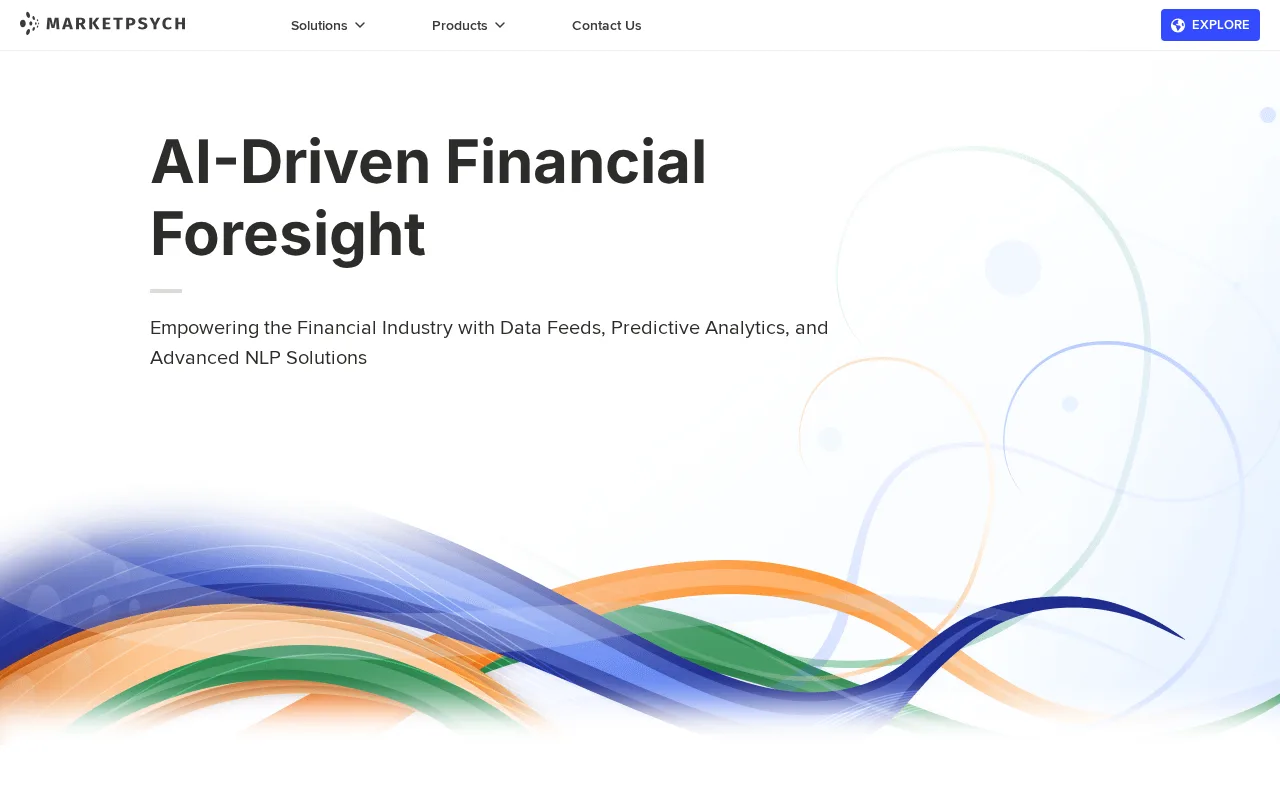
- MarketPsych Indices provide real-time sentiment and behavioral data from news and social media to support market analysis.
- How much does it cost?
- It offers a freemium plan with basic features; advanced access requires paid plans with pricing available upon request.
- Does it have a free plan?
- Yes, there is a free plan with limited access to sentiment indices and data streams.
- What integrations does it support?
- No public API or third-party integrations are currently documented.
- Who is it best for?
- It is best suited for investors, analysts, and researchers needing real-time market sentiment insights.
- What is this tool?
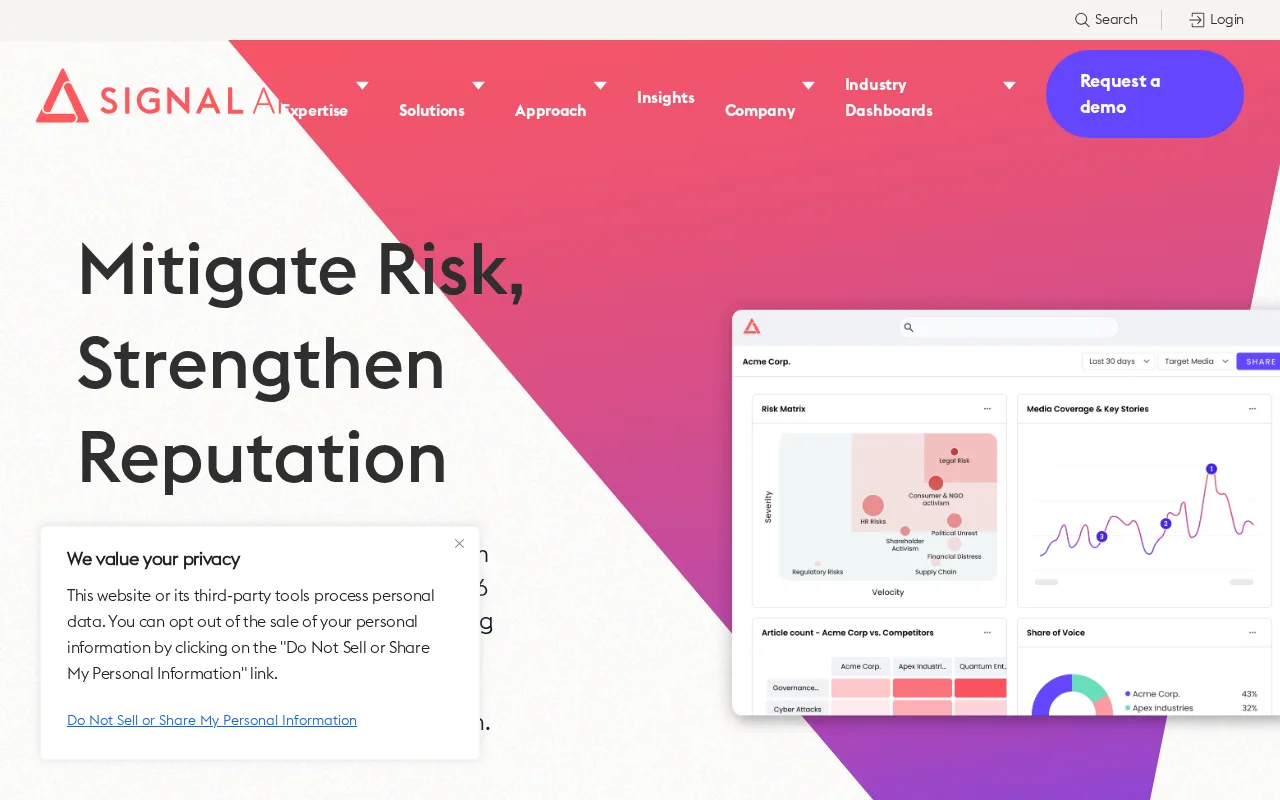
- Signal AI is a media monitoring and analytics platform that tracks brand reputation and emerging risks in real time.
- How much does it cost?
- Signal AI offers a free plan with limited features and paid subscriptions with advanced capabilities; exact pricing is not publicly listed.
- Does it have a free plan?
- Yes, Signal AI provides a free plan with basic media monitoring features.
- What integrations does it support?
- No public information on native integrations or API availability is provided.
- Who is it best for?
- It is best suited for PR, communications, and risk teams needing detailed, real-time media insights.
| Info | MarketPsych Indices | Signal AI |
|---|---|---|
| Pricing | Freemium | Freemium |
| Category | Marketing Tech & AdTech AI | Marketing Tech & AdTech AI |
| Deployment | Cloud | Cloud |
| Learning Curve | Intermediate | — |
| Free Plan | ✓ | ✓ |
| AI Agent | ✗ | ✓ |
| Autonomy | Assistant | Assistant |
| Risk Tier | Low | Medium |
 Dash Social
 CreativeX
 ShopSense AI
 Ocoya
Ocoya Brandwatch Consumer Research
 Brandseye
 Rival IQ
Signal AI (5.2) and MarketPsych Indices (5.3) score within our confidence interval — treat this as a tie for practical purposes. Pick based on the specific dimensions that matter to your workflow.
ⓘ How Volvenix scores work
Scores are computed by Volvenix — not supplied by the vendors, and not third-party benchmark results. Each 0–10 dimension (Overall, Features, Usability, Support, Pricing) is a directional estimate aggregated from catalog signals — editorial cataloguing, content depth, engagement, and provider-reputation indicators — so treat them as a starting point, not a lab result.
Confidence reflects how complete the underlying data is for both tools; lower confidence means fewer signals were available, not a worse tool. We never accept payment for rankings or scores. More about how Volvenix works →