 Volvenix
Fetcher vs Talview
AI-enhanced independent comparison — features, pros, cons, pricing and rankings.
 ChatGPT
  Claude
  Gemini
  Midjourney
  DALL-E
  Stable Diffusion
  Notion AI
  Canva
Canva  Grammarly
  GitHub Copilot
  ElevenLabs
  Perplexity
  Runway
  Synthesia
  Fireflies.ai
  Hugging Face Hub

| Dimension | Fetcher | Talview |
|---|---|---|
| Accuracy & Reliability | ||
| Ease of Use | ||
| Features & Capability | ||
| Value for Money | ||
| Performance & Speed | ||
| Popularity & Adoption |
Who each tool serves best — and when to pick the other one.
Recruiters and small to mid-sized hiring teams needing automated candidate sourcing and outreach.
- You want to automate candidate sourcing to save recruiter time and effort.
- You need to run personalized outreach campaigns to increase candidate engagement.
- Your team requires a simple tool to manage and track recruiting pipelines.
Enterprises requiring deep ATS integrations or extensive API access should look elsewhere.
- You need extensive ATS or HRIS integrations beyond Fetcher's native capabilities.
- Free-tier limits are a blocker for your recruiting volume or team size.
- You require a public API for custom workflow automation and integrations.
Effectiveness of AI-driven sourcing combined with outreach automation.
HR teams and recruiters in medium to large enterprises seeking to automate candidate screening and interviewing.
- You want to automate candidate screening and reduce manual evaluation time
- You need to conduct remote video interviews with AI-backed proctoring
- Your team requires detailed analytics on candidate performance and engagement
Small businesses or startups with limited hiring volume and budget constraints may find Talview too complex or costly.
- You need a simple, low-cost hiring tool without advanced AI features
- Free-tier limits are a blocker for your recruitment volume or feature needs
- You require extensive customization beyond the provided assessment templates
The platform’s ability to combine AI assessments with live and recorded video interviews for end-to-end hiring automation.
A canonical comparison across capabilities common to this category. Vendor-specific extras appear below in "Highlighted Features".
| Capability | Fetcher | Talview |
|---|---|---|
|
Free Tier Available
Usable without payment (with usage limits)
|
✓ | ✓ |
|
Free Trial
Time-limited paid-plan trial
|
— | ✓ |
Each tool's marketing-listed features. Where a feature appears under one tool but not the other, it usually reflects how the vendor describes their product — not a definitive capability gap.
- Candidate Sourcing — AI-powered search and filtering of candidates
- Outreach Automation — Personalized email campaigns with sequencing
- Pipeline Management — Track and manage candidates through hiring stages
- ATS Integrations — Limited native integrations with popular ATS
- Reporting and analytics — Basic recruiting performance dashboards
- AI Assessments — Automated skill and personality tests
- Video Interviewing — Live and recorded interviews with proctoring
- Remote Proctoring — Ensures candidate authenticity during tests
- Analytics Dashboard — Insights on candidate performance and engagement
- Integration Support — Connects with ATS and HRIS platforms
- AI-driven candidate sourcing improves efficiency
- Automated outreach increases candidate responses
- Simple, intuitive user interface
- Freemium plan available for small teams
- Good pipeline and workflow management
- Robust AI-powered candidate assessments
- Seamless video interviewing with proctoring
- Comprehensive analytics and reporting
- Supports remote and asynchronous hiring
- Improves hiring speed and quality
- Limited native integrations with ATS and HR tools
- No public API for custom automation
- No dedicated mobile app
- Limited pricing transparency for paid tiers
- Complex setup for smaller teams
- No public API available
- Automate candidate sourcing for open roles
- Run personalized outreach campaigns
- Manage recruiting pipelines efficiently
- Increase candidate response rates
- Reduce manual recruiting tasks
- Automated candidate screening
- Remote video interviewing
- Pre-employment skill testing
- Campus recruitment automation
- Compliance and proctoring for assessments
Where each tool runs — web, mobile, desktop, browser extension, API.
Natural languages each tool generates and understands. Primary languages are listed first.
What each tool can accept (input) and produce (output) — text, image, audio, video, code.
Fetcher offers a free plan with basic features and paid subscriptions for advanced sourcing and outreach capabilities.
-
Free
Free -
Pro
popular
Custom pricing
Talview offers a free plan with basic features and paid plans with advanced assessments and video interviewing; pricing details require contacting sales.
-
Free
Free
Regulatory frameworks each tool claims compliance with (HIPAA, SOC 2, GDPR, etc.).
Third-party audits and certifications that verify security controls.
Vendor-published numbers each tool highlights — usage scale, breadth, and operational stats. Different tools track different metrics, so direct row-by-row comparison usually isn't meaningful.
- Time saved per week 5 hours/week
- Hiring Time Reduction 30%
Who each tool is positioned for — primary audience first.
How you can reach support — email, live chat, phone, community, docs.
- Email primary
- Email primary
How each tool is classified in the Volvenix catalog.
These vocabulary domains are managed in our catalog but not yet exposed at the tool level. We're tracking them for future expansion of this comparison.
- Encryption Types — AES-256, ChaCha20, RSA-2048, and similar at-rest/in-transit cipher families.
- Encryption Contexts — where encryption is applied (data at rest, in transit, end-to-end).
- Plan-tier Model Mapping — which AI models are available on which pricing tier (currently only the model list is tracked, not the per-plan availability).
- What is this tool?
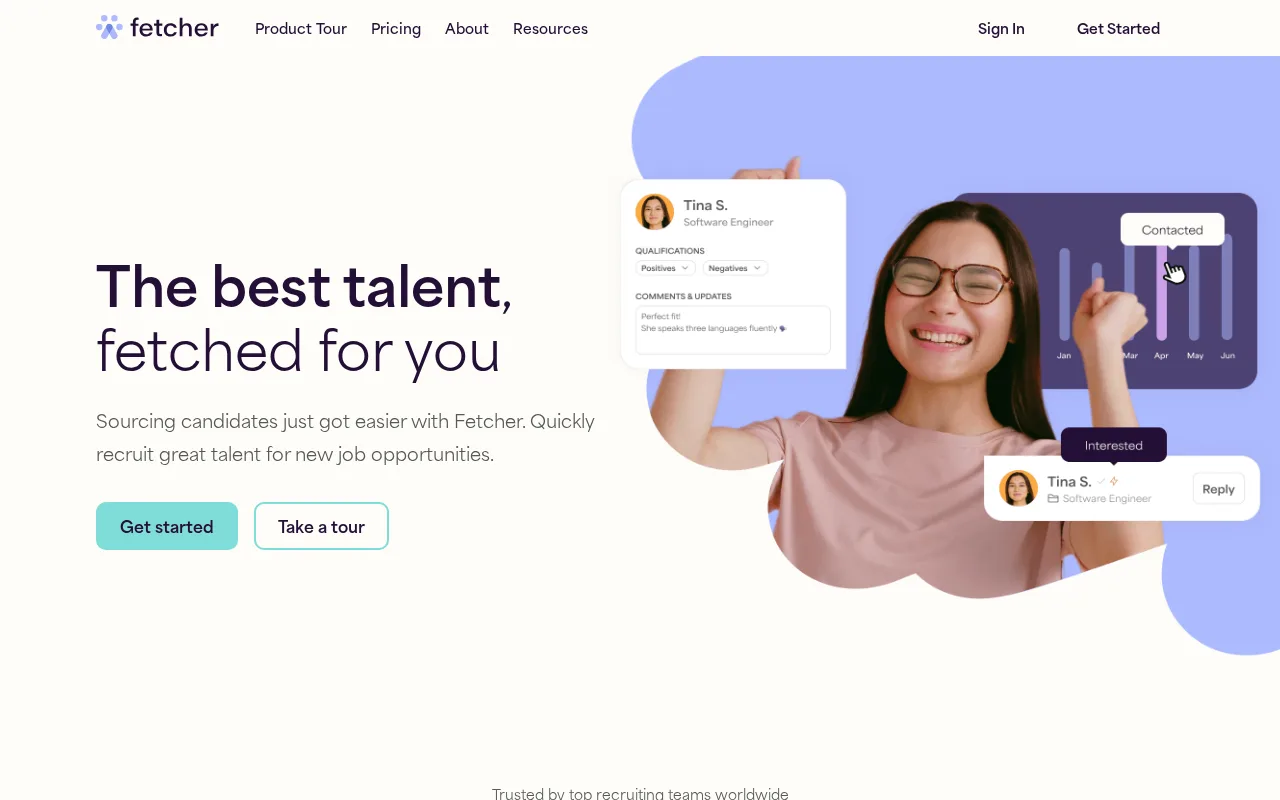
- Fetcher is a recruiting platform that automates candidate sourcing and outreach to help hiring teams fill roles faster.
- How much does it cost?
- Fetcher offers a free plan with basic features and paid subscriptions with advanced sourcing and outreach capabilities.
- Does it have a free plan?
- Yes, Fetcher provides a free plan suitable for individuals or small teams with limited usage.
- What integrations does it support?
- Fetcher supports limited native integrations with popular ATS platforms but does not offer a public API.
- Who is it best for?
- Fetcher is best for recruiters and small to mid-sized hiring teams looking to automate sourcing and outreach.
- What is this tool?
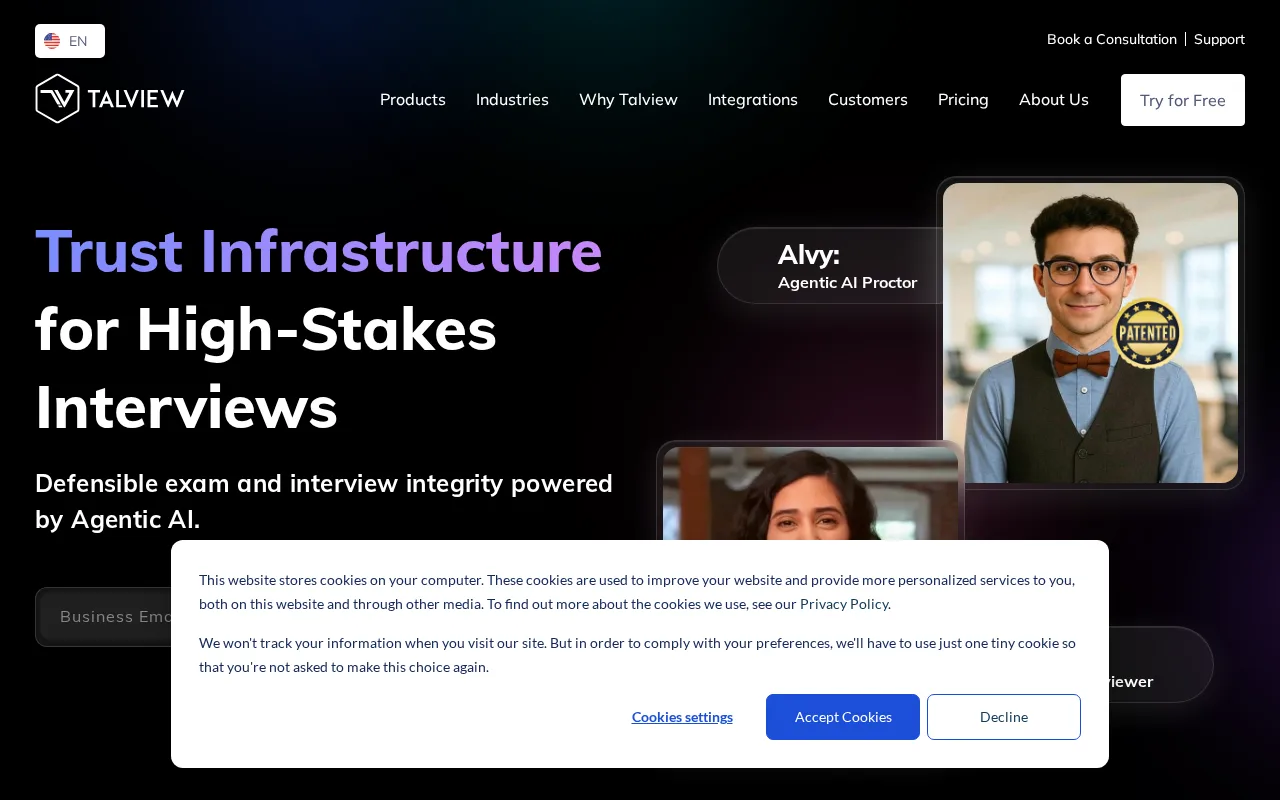
- Talview is a platform that automates talent acquisition with AI-powered assessments and video interviews.
- How much does it cost?
- Talview offers a free plan with basic features; paid plans require contacting sales for pricing.
- Does it have a free plan?
- Yes, Talview provides a free plan with limited features suitable for small teams.
- What integrations does it support?
- Talview supports integrations with popular ATS and HRIS platforms, primarily in paid plans.
- Who is it best for?
- It is best for HR teams in medium to large enterprises looking to automate hiring workflows.
| Info | Fetcher | Talview |
|---|---|---|
| Pricing | Freemium | Freemium |
| Category | AI Agents & Automation | AI Agents & Automation |
| Deployment | Cloud | Cloud |
| Learning Curve | Beginner | Intermediate |
| Free Plan | ✓ | ✓ |
| AI Agent | ✓ | ✓ |
| Autonomy | Assistant | Assistant |
| Risk Tier | Medium | Medium |
 Gem
Gem X0PA AI
 Beamery
Fetcher (5.5) and Talview (5.5) score within our confidence interval — treat this as a tie for practical purposes. Talview leads on pricing. Pick based on the specific dimensions that matter to your workflow.
ⓘ How Volvenix scores work
Scores are computed by Volvenix — not supplied by the vendors, and not third-party benchmark results. Each 0–10 dimension (Overall, Features, Usability, Support, Pricing) is a directional estimate aggregated from catalog signals — editorial cataloguing, content depth, engagement, and provider-reputation indicators — so treat them as a starting point, not a lab result.
Confidence reflects how complete the underlying data is for both tools; lower confidence means fewer signals were available, not a worse tool. We never accept payment for rankings or scores. More about how Volvenix works →