 Volvenix
Eduaide.Ai vs Genei
AI-enhanced independent comparison — features, pros, cons, pricing and rankings.
 ChatGPT
  Claude
  Gemini
  Midjourney
  DALL-E
  Stable Diffusion
  Notion AI
  Canva
Canva  Grammarly
  GitHub Copilot
  ElevenLabs
  Perplexity
  Runway
  Synthesia
  Fireflies.ai
  Hugging Face Hub

| Dimension | Eduaide.Ai | Genei |
|---|---|---|
| Accuracy & Reliability | ||
| Ease of Use | ||
| Features & Capability | ||
| Value for Money | ||
| Performance & Speed | ||
| Popularity & Adoption |
Who each tool serves best — and when to pick the other one.
K-12 teachers and small school teams needing quick, aligned lesson plans and teaching resources.
- You want to reduce lesson planning time with AI-generated resources.
- You need a variety of K-12 teaching materials like quizzes and rubrics.
- Your team requires curriculum-aligned content for classroom use.
Large districts requiring enterprise integrations or users needing mobile access and extensive third-party app support.
- You need deep third-party integrations like Slack or Zapier.
- Free-tier limits are a blocker for your daily resource creation needs.
- You require mobile apps or offline access for lesson planning.
Breadth of educational resource types and curriculum alignment capabilities.
Students, researchers, and professionals who need fast, accurate summaries of academic papers and articles.
- You need to quickly summarize multiple academic papers or articles.
- You want built-in citation management alongside summarization.
- Your team requires an intuitive tool to streamline research workflows.
Users requiring extensive third-party integrations, API access, or advanced customization should look elsewhere.
- You need deep integration with other productivity or research tools.
- Free-tier limits are a blocker for your volume of document processing.
- You require a public API for automation or custom workflows.
Effectiveness and speed of summarizing academic and research documents.
A canonical comparison across capabilities common to this category. Vendor-specific extras appear below in "Highlighted Features".
| Capability | Eduaide.Ai | Genei |
|---|---|---|
|
Text Generation
Produces human-like text from prompts
|
✓ | ✓ |
|
Reasoning & Analysis
Performs logical reasoning, summarisation, analysis
|
— | ✓ |
|
Free Tier Available
Usable without payment (with usage limits)
|
✓ | ✓ |
Each tool's marketing-listed features. Where a feature appears under one tool but not the other, it usually reflects how the vendor describes their product — not a definitive capability gap.
- Lesson Plan Generation — Create customized lesson plans quickly
- Worksheet and Quiz Creation — Generate quizzes and worksheets for various subjects
- Curriculum Alignment — Align resources with educational standards
- Rubric Generation — Create grading rubrics for assessments
- Collaboration Tools — Basic sharing features for teams
- Multi-document Summarization — Summarizes multiple documents simultaneously
- Citation Management — Organizes and manages citations for academic work
- PDF and Web Article Summarization — Supports summarizing PDFs and online articles
- Custom Summary Length — Adjust summary length and detail
- Browser Extension — Summarize content directly from browser
- Supports over 100 types of teaching resources
- Helps align content with curriculum standards
- User-friendly interface tailored for educators
- Reduces lesson planning workload significantly
- Suitable for a wide range of K-12 subjects
- Efficient summarization of complex academic content
- Multi-document summarization capability
- Citation management integration
- Clean and intuitive user interface
- Focused on academic and research use cases
- No mobile app available
- Limited third-party integrations
- No public API for automation
- Lacks API for automation
- Limited third-party integrations
- Generating daily lesson plans
- Creating quizzes and worksheets
- Aligning teaching materials with standards
- Developing grading rubrics
- Supporting substitute teachers with ready resources
- Summarizing academic research papers
- Reviewing multiple articles quickly
- Managing citations for research projects
- Preparing literature reviews
- Enhancing student study workflows
Natural languages each tool generates and understands. Primary languages are listed first.
What each tool can accept (input) and produce (output) — text, image, audio, video, code.
Offers a free plan with basic features and paid subscriptions for advanced tools and more resources.
-
Free
Free
Offers a free plan with basic features and paid subscriptions for enhanced usage and capabilities.
-
Free
Free
Regulatory frameworks each tool claims compliance with (HIPAA, SOC 2, GDPR, etc.).
None listed.
Vendor-published numbers each tool highlights — usage scale, breadth, and operational stats. Different tools track different metrics, so direct row-by-row comparison usually isn't meaningful.
- Hours saved per week 5 hours/week
- Documents summarized per day Varies by plan
Who each tool is positioned for — primary audience first.
How you can reach support — email, live chat, phone, community, docs.
- Email primary
- Email primary
How each tool is classified in the Volvenix catalog.
These vocabulary domains are managed in our catalog but not yet exposed at the tool level. We're tracking them for future expansion of this comparison.
- Encryption Types — AES-256, ChaCha20, RSA-2048, and similar at-rest/in-transit cipher families.
- Encryption Contexts — where encryption is applied (data at rest, in transit, end-to-end).
- Plan-tier Model Mapping — which AI models are available on which pricing tier (currently only the model list is tracked, not the per-plan availability).
- What is this tool?
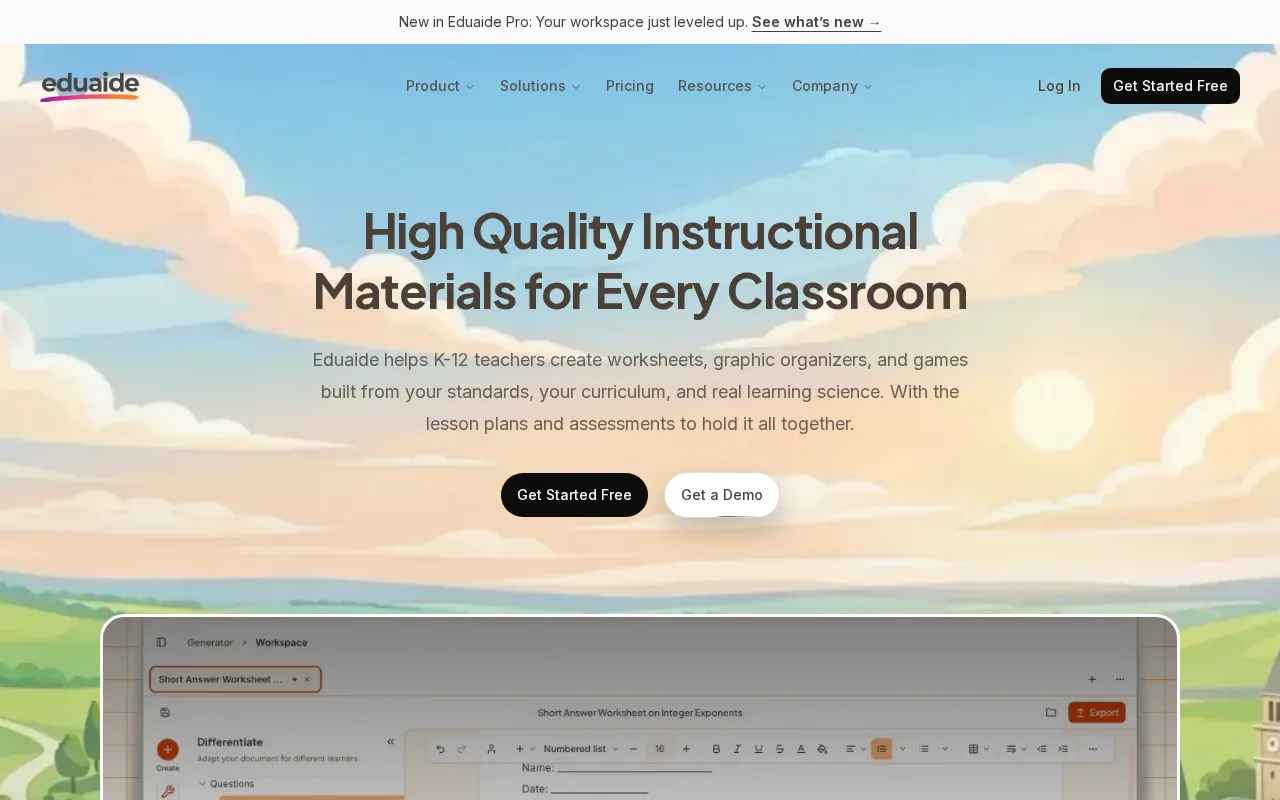
- Eduaide.Ai generates lesson plans, quizzes, worksheets, and rubrics for K-12 educators.
- How much does it cost?
- Eduaide.Ai offers a free plan with basic features and paid subscriptions for advanced tools.
- Does it have a free plan?
- Yes, there is a free plan available with limited resource generation.
- What integrations does it support?
- Currently, Eduaide.Ai has limited third-party integrations and no public API.
- Who is it best for?
- It is best suited for K-12 teachers and small school teams needing quick lesson planning.
- What is this tool?
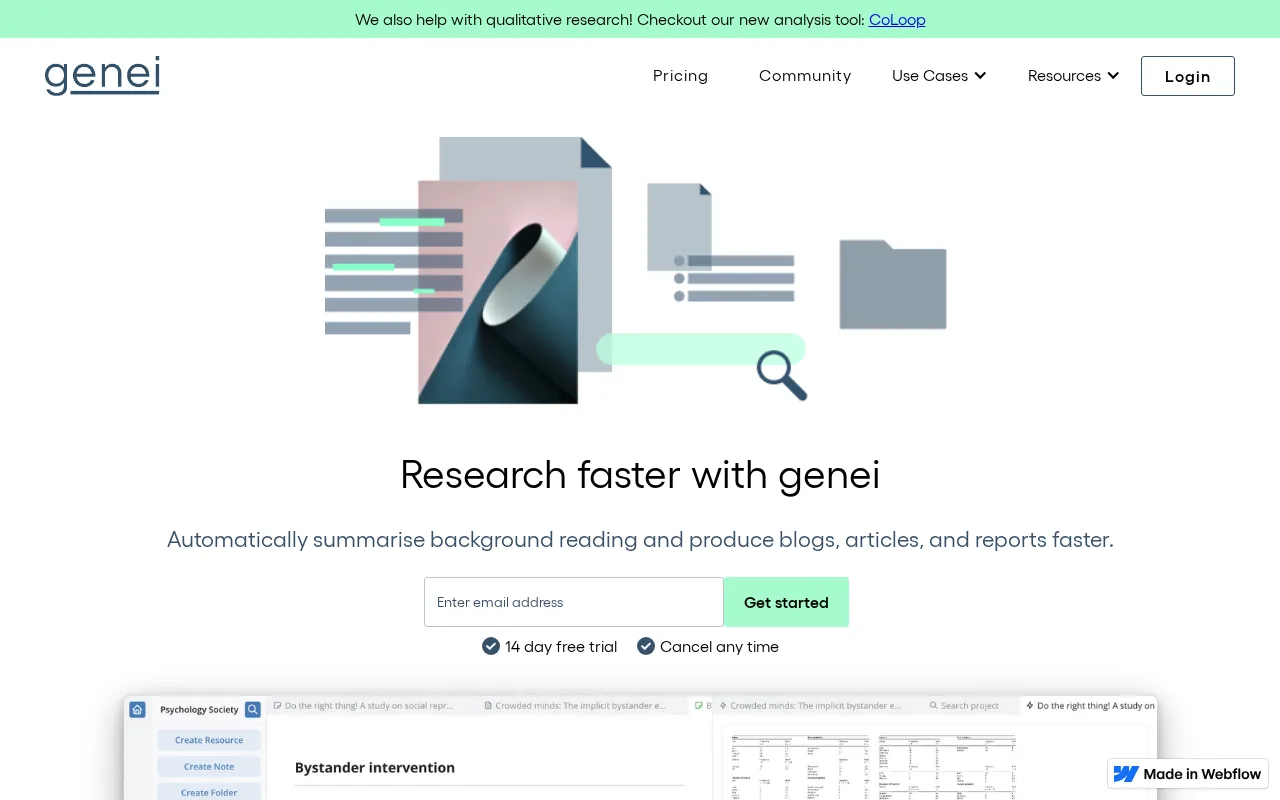
- Genei is an AI assistant that summarizes academic papers, articles, and PDFs to help researchers and students.
- How much does it cost?
- Genei offers a free plan with basic features; paid plans provide enhanced capabilities and higher usage limits.
- Does it have a free plan?
- Yes, Genei provides a free plan suitable for individual users with limited document processing.
- What integrations does it support?
- Genei currently has limited third-party integrations and no public API.
- Who is it best for?
- It is best suited for students, researchers, and professionals needing fast summarization and citation management.
| Info | Eduaide.Ai | Genei |
|---|---|---|
| Pricing | Freemium | Freemium |
| Category | AI Writing & Content | AI Writing & Content |
| Deployment | Cloud | Cloud |
| Learning Curve | Beginner | Beginner |
| Free Plan | ✓ | ✓ |
| AI Agent | ✓ | ✓ |
| Autonomy | Assistant | Assistant |
| Risk Tier | Low | Low |
 Regie.ai
 SciSpace
 TeachMate AI
 Llama Cookbook
 NeuroText
 Litellm
 Peppertype.ai
Genei (5.1) and Eduaide.Ai (5.1) score within our confidence interval — treat this as a tie for practical purposes. Pick based on the specific dimensions that matter to your workflow.
ⓘ How Volvenix scores work
Scores are computed by Volvenix — not supplied by the vendors, and not third-party benchmark results. Each 0–10 dimension (Overall, Features, Usability, Support, Pricing) is a directional estimate aggregated from catalog signals — editorial cataloguing, content depth, engagement, and provider-reputation indicators — so treat them as a starting point, not a lab result.
Confidence reflects how complete the underlying data is for both tools; lower confidence means fewer signals were available, not a worse tool. We never accept payment for rankings or scores. More about how Volvenix works →