 Volvenix
Beamery vs Visier
AI-enhanced independent comparison — features, pros, cons, pricing and rankings.
 ChatGPT
  Claude
  Gemini
  Midjourney
  DALL-E
  Stable Diffusion
  Notion AI
  Canva
Canva  Grammarly
  GitHub Copilot
  ElevenLabs
  Perplexity
  Runway
  Synthesia
  Fireflies.ai
  Hugging Face Hub

| Dimension | Beamery | Visier |
|---|---|---|
| Accuracy & Reliability | ||
| Ease of Use | ||
| Features & Capability | ||
| Value for Money | ||
| Performance & Speed | ||
| Popularity & Adoption |
Who each tool serves best — and when to pick the other one.
Large recruitment teams or enterprises needing a comprehensive CRM-driven talent acquisition platform with automation.
- You need to build and nurture long-term candidate relationships with CRM tools
- You want to automate candidate outreach and recruitment workflows at scale
- Your team requires detailed talent pipeline visibility and analytics
Small businesses or teams seeking a simple, low-cost applicant tracking system without complex CRM features.
- You need a straightforward ATS without CRM or automation complexity
- Free-tier limits are a blocker for your recruiting volume or features
- You require a low-cost solution for small or infrequent hiring needs
The platform’s strength lies in its CRM and automation capabilities for proactive talent engagement.
HR teams and business leaders in mid-to-large enterprises seeking deep workforce insights and benchmarking capabilities.
- You need detailed workforce analytics for retention and productivity insights
- You want embedded benchmarking to compare workforce metrics against peers
- Your team requires natural language querying for accessible data exploration
Small businesses or startups without enterprise budgets or those needing transparent, self-serve pricing.
- You need transparent, publicly available pricing for budgeting
- Free-tier limits are a blocker for evaluating the platform
- You require a solution tailored for small businesses or startups
Enterprise-grade workforce analytics with embedded benchmarking and natural language querying.
A canonical comparison across capabilities common to this category. Vendor-specific extras appear below in "Highlighted Features".
| Capability | Beamery | Visier |
|---|---|---|
|
Free Tier Available
Usable without payment (with usage limits)
|
✓ | — |
Each tool's marketing-listed features. Where a feature appears under one tool but not the other, it usually reflects how the vendor describes their product — not a definitive capability gap.
- Candidate Relationship Management — Centralized CRM for talent pools and candidate data
- Recruitment Automation — Automated outreach and workflow triggers
- Talent Pipeline Analytics — Insights and reporting on recruitment metrics
- Integration with ATS and HRIS — Connects with popular HR systems
- Customizable workflows — Tailor recruitment processes to team needs
- Workforce Analytics — Analyze employee data to identify trends and risks
- Benchmarking — Compare workforce metrics against industry peers
- Natural language querying — Use conversational queries to explore data
- Retention Risk Analysis — Identify employees at risk of leaving
- Productivity Insights — Measure and analyze workforce productivity dynamics
- Unified recruitment CRM to manage candidate relationships
- Automation tools to streamline outreach and workflows
- Strong analytics for talent pipeline insights
- Scalable platform suitable for enterprise needs
- Integrates with common HR systems
- Robust workforce analytics for mid-to-large enterprises
- Embedded benchmarking against industry peers
- Natural language querying simplifies data exploration
- Cloud-based platform with scalable architecture
- Strong focus on retention and productivity insights
- Steep learning curve for new users
- Pricing details are not fully transparent
- Limited free plan features for smaller teams
- No public pricing information available
- Not suitable for small businesses or startups
- Limited information on API or integrations
- Building proactive talent pipelines
- Automating candidate outreach campaigns
- Managing enterprise recruitment workflows
- Improving candidate engagement and experience
- Analyzing recruitment funnel performance
- Workforce planning and optimization
- Employee retention risk identification
- Productivity trend analysis
- Benchmarking against industry standards
- Data-driven decision making
The underlying AI models each tool runs on. Model details show on hover.
No models confirmed.
Natural languages each tool generates and understands. Primary languages are listed first.
What each tool can accept (input) and produce (output) — text, image, audio, video, code.
Beamery offers a freemium model with limited features and paid plans that scale with team size and feature needs, typically requiring contact for detailed pricing.
-
Free
Free
Pricing is custom and tailored for enterprise customers; contact sales for details.
-
Enterprise
Custom pricing
Regulatory frameworks each tool claims compliance with (HIPAA, SOC 2, GDPR, etc.).
None listed.
Third-party audits and certifications that verify security controls.
No certifications listed.
Vendor-published numbers each tool highlights — usage scale, breadth, and operational stats. Different tools track different metrics, so direct row-by-row comparison usually isn't meaningful.
No metrics published.
- Workforce Insights Delivered Thousands of enterprises
Who each tool is positioned for — primary audience first.
How you can reach support — email, live chat, phone, community, docs.
- Documentation primary visit ↗
- Email primary
How each tool is classified in the Volvenix catalog.
These vocabulary domains are managed in our catalog but not yet exposed at the tool level. We're tracking them for future expansion of this comparison.
- Encryption Types — AES-256, ChaCha20, RSA-2048, and similar at-rest/in-transit cipher families.
- Encryption Contexts — where encryption is applied (data at rest, in transit, end-to-end).
- Plan-tier Model Mapping — which AI models are available on which pricing tier (currently only the model list is tracked, not the per-plan availability).
- What is this tool?
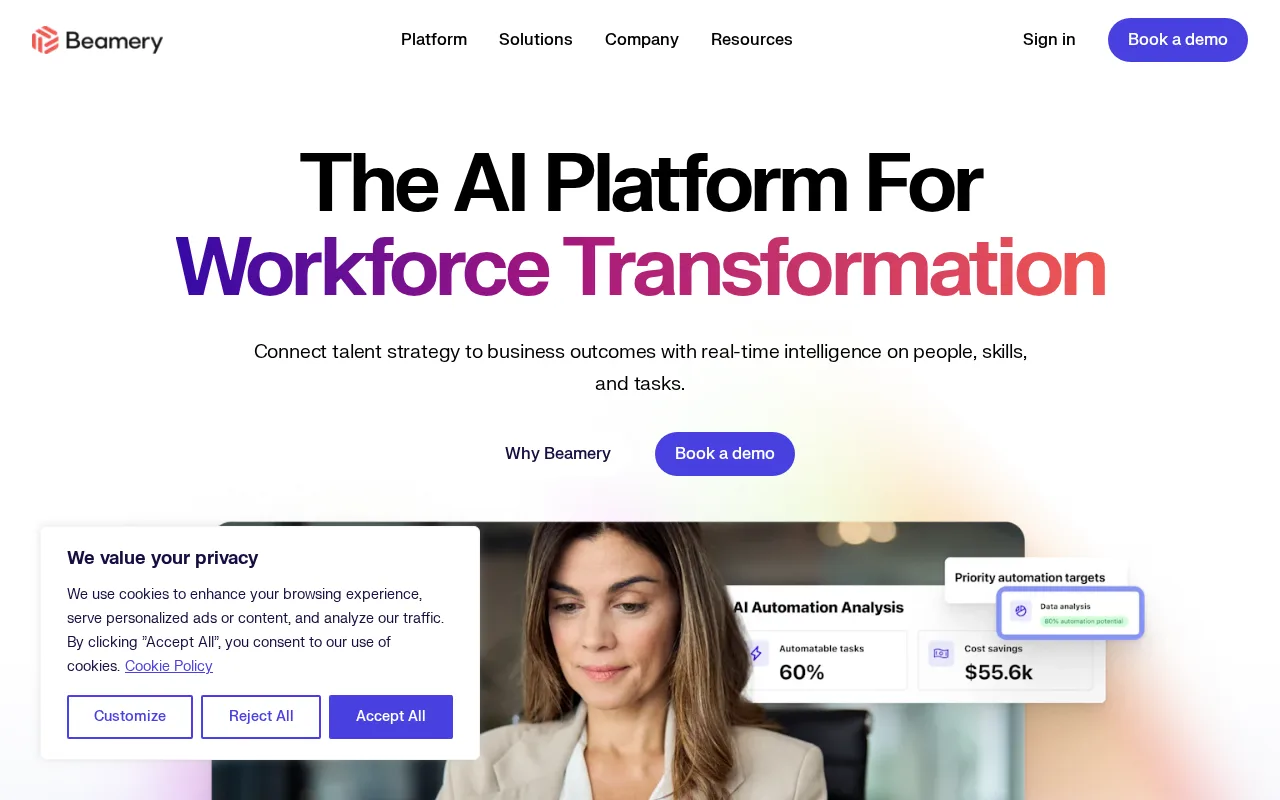
- Beamery is a talent acquisition platform combining CRM and automation to help recruiters manage and engage candidates.
- How much does it cost?
- Beamery offers a free plan with basic features; paid plans vary and require contacting sales for pricing.
- Does it have a free plan?
- Yes, Beamery provides a free plan with limited CRM and automation capabilities.
- What integrations does it support?
- Beamery integrates with common ATS and HRIS systems, though specifics require contacting sales.
- Who is it best for?
- It is best suited for enterprise recruitment teams needing advanced CRM and automation features.
- What is this tool?
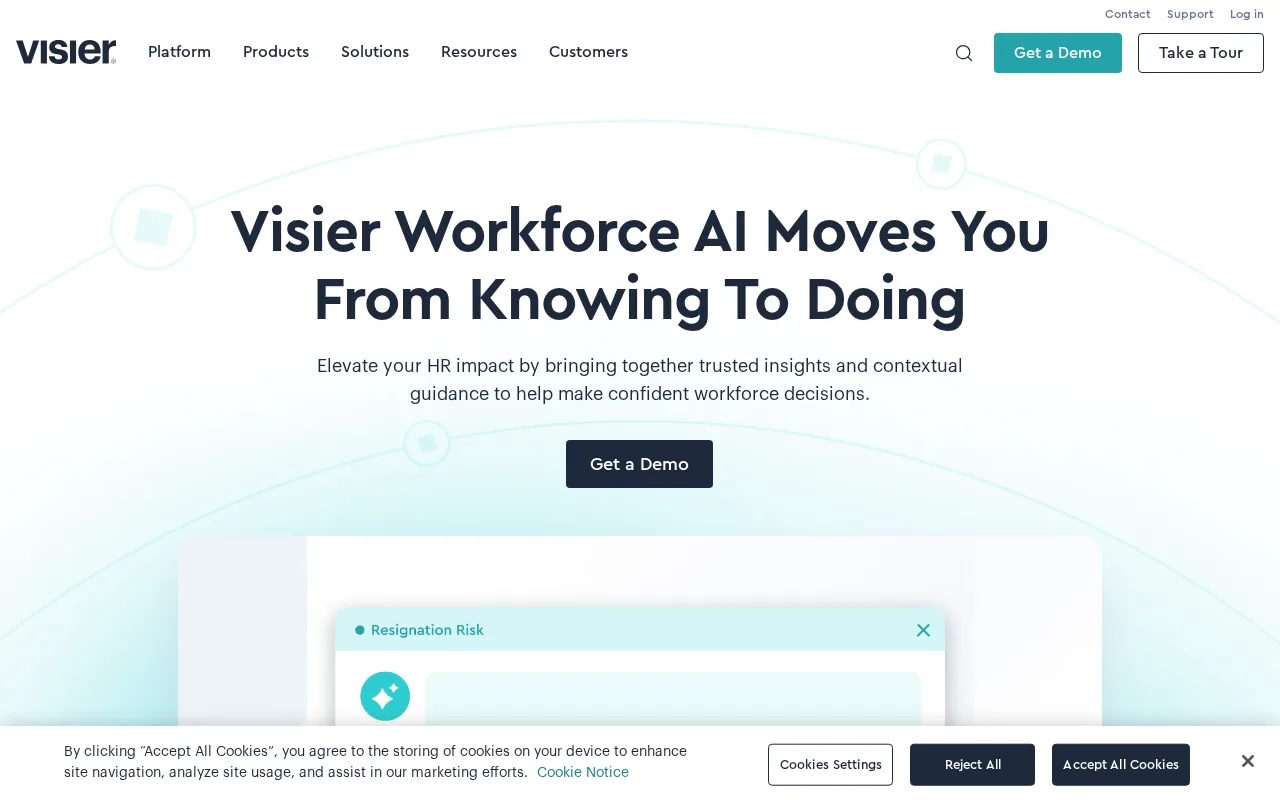
- Visier is a cloud-based people analytics platform that helps enterprises analyze workforce trends, retention risks, and productivity.
- How much does it cost?
- Pricing is custom and tailored for enterprise customers; you must contact Visier sales for details.
- Does it have a free plan?
- No, Visier does not offer a free plan or publicly available trial.
- What integrations does it support?
- Integration details are not publicly disclosed; typically integrates with HRIS and payroll systems.
- Who is it best for?
- Best suited for HR and business leaders in mid-to-large enterprises needing advanced workforce analytics.
| Info | Beamery | Visier |
|---|---|---|
| Pricing | Freemium | Enterprise |
| Category | HR Tech & Workforce AI | AI Agents & Automation |
| Deployment | Cloud | Cloud |
| Learning Curve | Intermediate | Intermediate |
| Free Plan | ✓ | ✗ |
| AI Agent | ✓ | ✓ |
| Autonomy | Assistant | Assistant |
| Risk Tier | Medium | Low |
| BYO API Key | ✗ | — |
| Local Models | ✗ | — |
| Fine-tuning | ✗ | — |
 Gloat
Gloat Gem
Gem Zoomph
 X0PA AI
 Talview
 Poised
Visier and Beamery have similar overall scores, with Visier at 5.8/10 and Beamery at 5.7/10. Visier is positioned as an enterprise-level solution, typically suited for large organizations requiring advanced workforce analytics and planning capabilities. In contrast, Beamery offers a freemium pricing model, making it accessible to smaller businesses and teams focused on talent acquisition and candidate relationship management. While Visier emphasizes data-driven HR insights and strategic workforce planning, Beamery centers on recruitment marketing and candidate engagement.
ⓘ How Volvenix scores work
Scores are computed by Volvenix — not supplied by the vendors, and not third-party benchmark results. Each 0–10 dimension (Overall, Features, Usability, Support, Pricing) is a directional estimate aggregated from catalog signals — editorial cataloguing, content depth, engagement, and provider-reputation indicators — so treat them as a starting point, not a lab result.
Confidence reflects how complete the underlying data is for both tools; lower confidence means fewer signals were available, not a worse tool. We never accept payment for rankings or scores. More about how Volvenix works →