 Volvenix
Azure AI Vision vs Taggun
AI-enhanced independent comparison — features, pros, cons, pricing and rankings.
 ChatGPT
  Claude
  Gemini
  Midjourney
  DALL-E
  Stable Diffusion
  Notion AI
  Canva
Canva  Grammarly
  GitHub Copilot
  ElevenLabs
  Perplexity
  Runway
  Synthesia
  Fireflies.ai
  Hugging Face Hub

| Dimension | Azure AI Vision | Taggun |
|---|---|---|
| Accuracy & Reliability | ||
| Ease of Use | ||
| Features & Capability | ||
| Value for Money | ||
| Performance & Speed | ||
| Popularity & Adoption |
Who each tool serves best — and when to pick the other one.
Developers and enterprises needing scalable, cloud-based OCR and image analysis integrated with Azure services.
- You need scalable OCR and image recognition APIs integrated with Azure cloud services.
- You want reliable, well-documented computer vision tools for enterprise applications.
- Your team requires automated text extraction and object detection in cloud environments.
Small teams or individuals without Azure experience or those seeking fully transparent, low-cost pricing options.
- You need a free or fully transparent pricing model for small-scale use.
- Free-tier limits are a blocker for your development or testing needs.
- You require a standalone, self-hosted computer vision solution.
Seamless integration with Azure cloud infrastructure and enterprise-grade scalability.
Small businesses, developers, and finance teams needing fast, accurate receipt and invoice text extraction via API.
- You need to automate data entry from receipts and invoices quickly and accurately.
- You want a simple OCR API with a freemium pricing model for easy testing.
- Your team requires reliable text extraction without complex setup or integrations.
Enterprises requiring deep integrations, advanced customization, or extensive document type support should look elsewhere.
- You need extensive integrations with ERP or accounting software out of the box.
- Free-tier limits are a blocker for your high-volume document processing needs.
- You require advanced document classification or multi-language support.
Accuracy and speed of text extraction from receipts and invoices via a simple API.
A canonical comparison across capabilities common to this category. Vendor-specific extras appear below in "Highlighted Features".
| Capability | Azure AI Vision | Taggun |
|---|---|---|
|
API Access
Programmatic access via documented API
|
— | ✓ |
|
Free Tier Available
Usable without payment (with usage limits)
|
— | ✓ |
Each tool's marketing-listed features. Where a feature appears under one tool but not the other, it usually reflects how the vendor describes their product — not a definitive capability gap.
- Text Extraction — Automated OCR for printed and handwritten text
- Image Tagging — Assigns descriptive tags to images
- Object Detection — Detects and classifies objects within images
- Custom Vision Models — Train custom image classifiers
- Spatial Analysis — Analyzes spatial relationships in images
- Receipt OCR — Extracts text from receipts with high accuracy
- Invoice OCR — Processes invoices for automated data capture
- Multi-platform Support — Supports JPG, PNG, PDF document types
- Custom Fields Extraction — Paid feature for tailored data extraction
- Reliable text extraction and image analysis
- Strong Azure ecosystem integration
- Scalable for enterprise workloads
- Comprehensive documentation
- Supports multiple image recognition tasks
- Accurate OCR specialized for receipts and invoices
- Easy integration with simple API
- Freemium plan available for testing
- Fast text extraction performance
- Supports multiple document formats
- Pricing details are not publicly transparent
- No free tier or trial available
- Primarily suited for Azure users, limiting accessibility
- Limited integration options
- No public API documentation for advanced features
- Free tier usage limits may restrict heavy users
- Automated document text extraction
- Image content tagging for media libraries
- Object detection in retail inventory
- Visual data analysis for enterprises
- Integration into Azure-based workflows
- Automated expense management
- Invoice processing for accounting
- Data entry automation
- Receipt digitization for finance teams
- Mobile app receipt scanning
No third-party integrations confirmed.
Natural languages each tool generates and understands. Primary languages are listed first.
What each tool can accept (input) and produce (output) — text, image, audio, video, code.
Pricing is usage-based and tiered, with costs depending on API calls and features; no detailed public pricing tiers available.
-
Standard
popular
$100.00/mo
Offers a free tier with limited usage and paid subscription plans for higher volume and additional features.
-
Free
Free -
Pro
popular
Custom pricing
Regulatory frameworks each tool claims compliance with (HIPAA, SOC 2, GDPR, etc.).
Third-party audits and certifications that verify security controls.
No certifications listed.
Vendor-published numbers each tool highlights — usage scale, breadth, and operational stats. Different tools track different metrics, so direct row-by-row comparison usually isn't meaningful.
- Scalability High
- Reliability Enterprise-grade
- Accuracy High
Languages, frameworks, databases, and infrastructure each tool is built on. Mostly relevant for self-hosted or open-source tools.
Stack not disclosed.
Who each tool is positioned for — primary audience first.
How each tool is classified in the Volvenix catalog.
These vocabulary domains are managed in our catalog but not yet exposed at the tool level. We're tracking them for future expansion of this comparison.
- Encryption Types — AES-256, ChaCha20, RSA-2048, and similar at-rest/in-transit cipher families.
- Encryption Contexts — where encryption is applied (data at rest, in transit, end-to-end).
- Plan-tier Model Mapping — which AI models are available on which pricing tier (currently only the model list is tracked, not the per-plan availability).
- What is this tool?
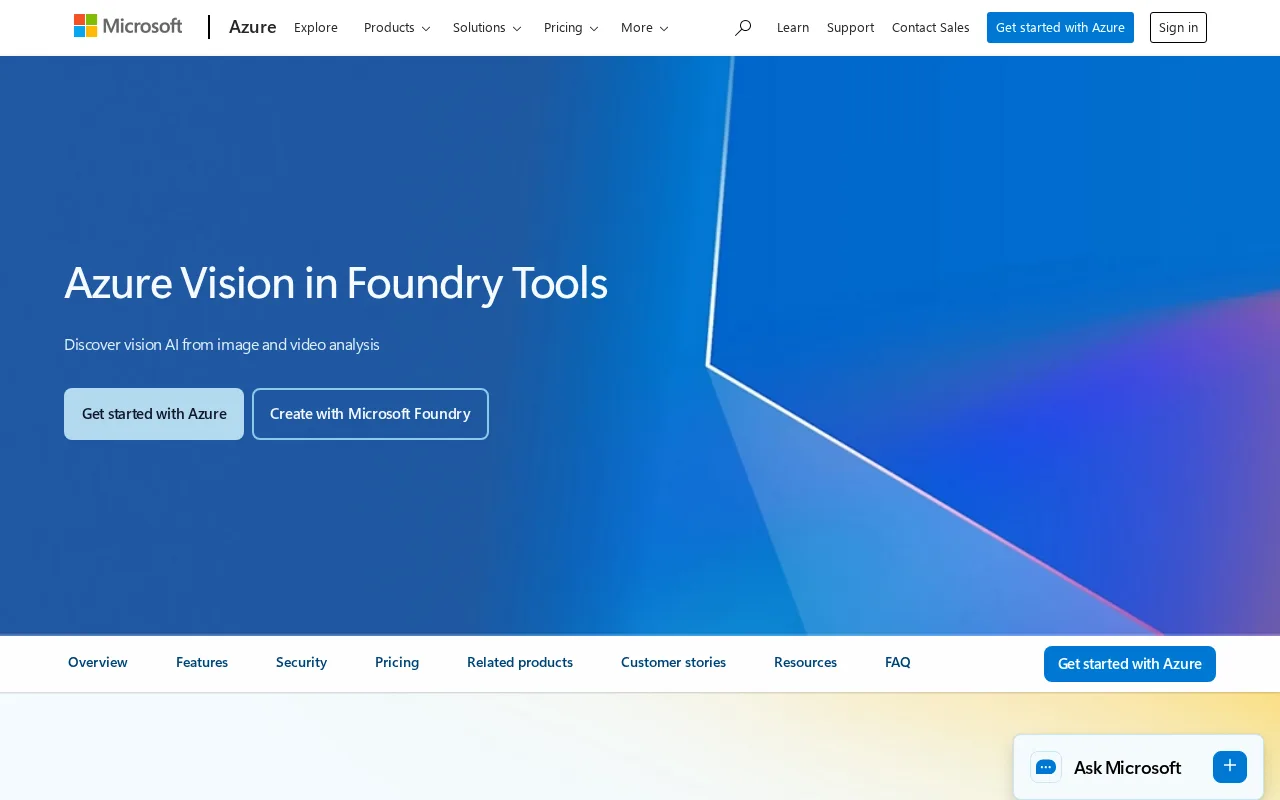
- Azure AI Vision is a set of cloud APIs for text extraction, image tagging, and object detection.
- How much does it cost?
- Pricing is usage-based and tiered, but exact costs are not publicly detailed.
- Does it have a free plan?
- No, Azure AI Vision does not offer a free plan or trial currently.
- What integrations does it support?
- It integrates natively with Azure cloud services and tools.
- Who is it best for?
- It is best suited for developers and enterprises using Azure for scalable computer vision.
- What is this tool?
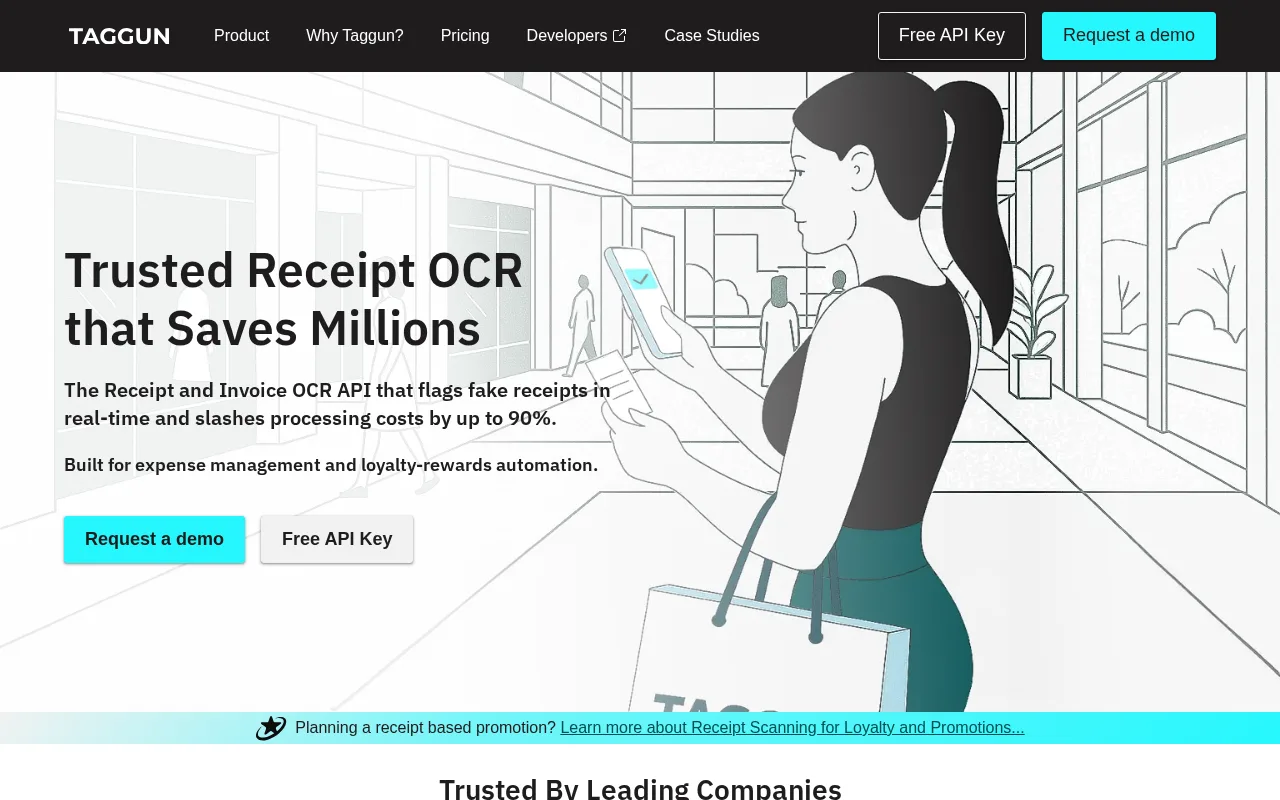
- Taggun is an OCR tool that extracts text from receipts and invoices to automate data capture.
- How much does it cost?
- Taggun offers a free tier with limited scans and paid plans for higher usage and features.
- Does it have a free plan?
- Yes, Taggun provides a free plan suitable for individuals and small-scale use.
- What integrations does it support?
- Taggun primarily offers API access; no extensive native integrations are documented.
- Who is it best for?
- It is best for small businesses and developers needing fast, accurate receipt and invoice OCR.
| Info | Azure AI Vision | Taggun |
|---|---|---|
| Pricing | Paid | Freemium |
| Category | Computer Vision & Image Recognition | Document AI & OCR |
| Deployment | Cloud | Cloud |
| Learning Curve | Intermediate | Beginner |
| Free Plan | ✗ | ✓ |
| AI Agent | ✓ | ✗ |
| Autonomy | Assistant | Assistant |
| Risk Tier | Medium | Low |
 Vuforia
 Hive
Hive Mathpix
 Labellerr
 Simon Says
 Docsumo
 Mindee
 Scanbot SDK
Azure AI Vision has an overall score of 5.4/10 and operates on a paid pricing model, offering advanced image recognition and analysis features suitable for enterprise-level applications. Taggun, with an overall score of 5.1/10, uses a freemium pricing model and focuses primarily on receipt scanning and data extraction for small to medium businesses. While Azure AI Vision emphasizes broad AI-driven image processing capabilities, Taggun specializes in financial document processing and expense management.
ⓘ How Volvenix scores work
Scores are computed by Volvenix — not supplied by the vendors, and not third-party benchmark results. Each 0–10 dimension (Overall, Features, Usability, Support, Pricing) is a directional estimate aggregated from catalog signals — editorial cataloguing, content depth, engagement, and provider-reputation indicators — so treat them as a starting point, not a lab result.
Confidence reflects how complete the underlying data is for both tools; lower confidence means fewer signals were available, not a worse tool. We never accept payment for rankings or scores. More about how Volvenix works →