 Volvenix
Auphonic vs Descript
AI-enhanced independent comparison — features, pros, cons, pricing and rankings.
 ChatGPT
  Claude
  Gemini
  Midjourney
  DALL-E
  Stable Diffusion
  Notion AI
  Canva
Canva  Grammarly
  GitHub Copilot
  ElevenLabs
  Perplexity
  Runway
  Synthesia
  Fireflies.ai
  Hugging Face Hub

| Dimension | Auphonic | Descript |
|---|---|---|
| Accuracy & Reliability | — | |
| Ease of Use | — | |
| Features & Capability | — | |
| Value for Money | — | |
| Performance & Speed | — | |
| Popularity & Adoption | — |
Who each tool serves best — and when to pick the other one.
Podcasters, broadcasters, and content creators needing automated audio cleanup and mastering without complex software.
- You want to quickly improve audio quality without manual editing expertise.
- You need consistent loudness leveling and noise reduction for podcasts or broadcasts.
- Your team requires simple multi-track audio processing with automated workflows.
Audio engineers or producers requiring detailed manual editing and real-time collaboration features.
- You need advanced manual audio editing and mixing capabilities.
- Free-tier limits are a blocker for your high-volume audio production needs.
- You require real-time collaboration or integrated recording features.
Automated audio post-production with minimal user intervention and quality results.
Podcasters, video creators, and content producers who want fast, intuitive editing by working with text transcripts.
- You want to edit audio/video by editing text transcripts quickly and easily
- You need a simple tool for podcast and video content creation without steep learning curves
- Your team requires collaborative editing with version control and screen recording
Users needing advanced audio engineering tools or highly detailed video editing should look elsewhere.
- You need professional-grade audio mixing and mastering features
- Free-tier limits are a blocker for your large-scale production needs
- You require deep video editing with advanced effects and transitions
Text-based editing of audio and video via transcripts is the core unique feature.
A canonical comparison across capabilities common to this category. Vendor-specific extras appear below in "Highlighted Features".
| Capability | Auphonic | Descript |
|---|---|---|
|
Free Tier Available
Usable without payment (with usage limits)
|
✓ | ✓ |
Each tool's marketing-listed features. Where a feature appears under one tool but not the other, it usually reflects how the vendor describes their product — not a definitive capability gap.
- Automated Audio Leveling — Balances loudness across tracks automatically
- Noise and Hum Reduction — Removes background noise and hum from recordings
- Multi-track Processing — Processes multiple audio tracks simultaneously
- Encoding and Export — Exports audio in various formats including MP3, AAC, and WAV
- Speech Recognition — Generates transcripts from audio files
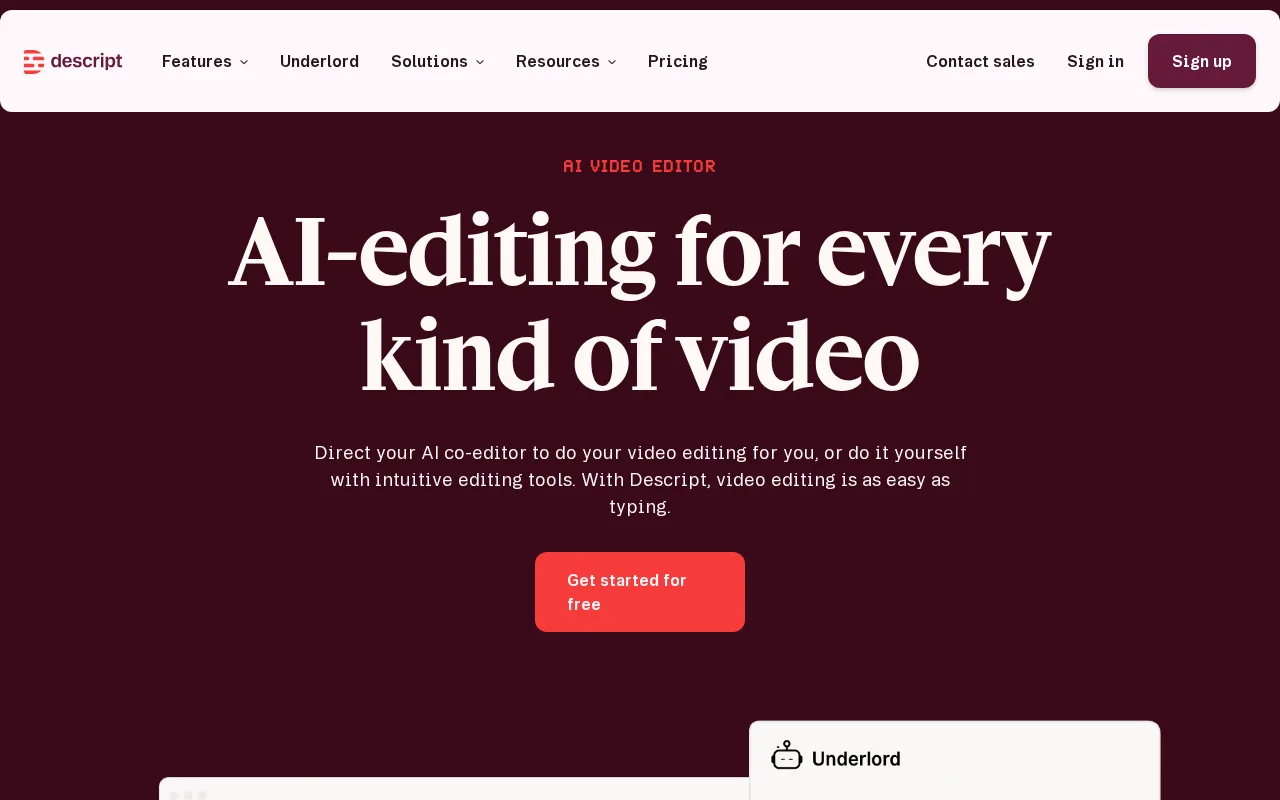
- Text-based editing — Edit audio and video by editing transcripts
- Overdub voice cloning — Create synthetic voiceovers from your voice
- Screen recording — Record your screen with audio for tutorials and presentations
- Filler word removal — Automatically remove filler words from audio
- Multi-track Editing — Edit multiple audio and video tracks simultaneously
- Automates complex audio post-production tasks
- Supports multiple audio formats and encoding
- User-friendly interface suitable for beginners
- Multi-track processing capability
- Reliable noise reduction and leveling
- Innovative text-based editing simplifies complex workflows
- Strong collaboration and screen recording features
- High-quality overdub voice cloning
- Cross-platform cloud access
- Good transcription accuracy
- Lacks advanced manual editing features
- No real-time collaboration or recording
- Limited advanced audio mixing and mastering features
- Video editing capabilities are basic compared to specialized editors
- No official mobile app for editing
- Podcast audio post-production
- Broadcast audio leveling and cleanup
- Online course audio enhancement
- Voiceover audio mastering
- Audiobook production
- Podcast editing and production
- Video content creation and editing
- Screen recording tutorials and demos
- Voiceover creation with overdub
- Collaborative media projects
The underlying AI models each tool runs on. Model details show on hover.
No models confirmed.
Natural languages each tool generates and understands. Primary languages are listed first.
What each tool can accept (input) and produce (output) — text, image, audio, video, code.
Free tier offers limited audio hours per month; paid plans increase processing time and add features.
-
Free
Free -
Pro
popular
$11.00/mo -
Plus
$29.00/mo
Descript offers a free plan with basic features and paid subscriptions for advanced tools and higher usage limits.
-
Free
Free -
Creator
popular
$12.00/mo -
Pro
$24.00/mo
Regulatory frameworks each tool claims compliance with (HIPAA, SOC 2, GDPR, etc.).
None listed.
Third-party audits and certifications that verify security controls.
No certifications listed.
Vendor-published numbers each tool highlights — usage scale, breadth, and operational stats. Different tools track different metrics, so direct row-by-row comparison usually isn't meaningful.
No metrics published.
- Transcription Hours Up to 20 hours/month on paid plans hours/month
Who each tool is positioned for — primary audience first.
How each tool is classified in the Volvenix catalog.
These vocabulary domains are managed in our catalog but not yet exposed at the tool level. We're tracking them for future expansion of this comparison.
- Encryption Types — AES-256, ChaCha20, RSA-2048, and similar at-rest/in-transit cipher families.
- Encryption Contexts — where encryption is applied (data at rest, in transit, end-to-end).
- Plan-tier Model Mapping — which AI models are available on which pricing tier (currently only the model list is tracked, not the per-plan availability).
- What is this tool?
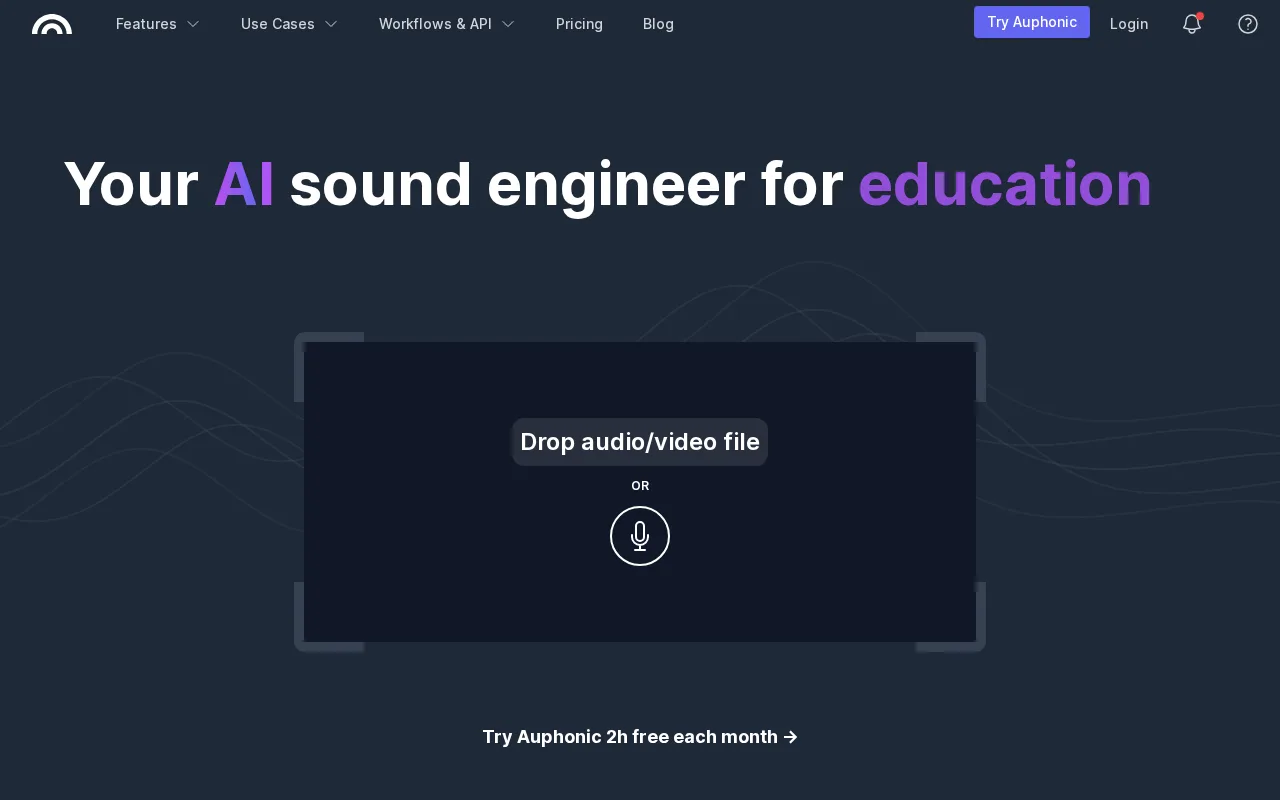
- Auphonic automates audio post-production tasks like leveling and noise reduction for creators.
- How much does it cost?
- Auphonic offers a free tier with limited hours and paid plans starting at $11/month.
- Does it have a free plan?
- Yes, there is a free plan with 2 hours of audio processing per month.
- What integrations does it support?
- Auphonic integrates with podcast hosting platforms and supports file uploads via web and FTP.
- Who is it best for?
- It is best for podcasters and content creators seeking automated audio cleanup without complex tools.
- What is this tool?
- Descript is a media editing platform that lets users edit audio and video by editing text transcripts.
- How much does it cost?
- Descript offers a free plan and paid subscriptions starting at $12/month with additional features.
- Does it have a free plan?
- Yes, Descript provides a free plan with limited transcription hours and basic editing tools.
- What integrations does it support?
- Descript integrates natively with Zoom and supports exporting to various audio/video formats.
- Who is it best for?
- It is best for podcasters, video creators, and teams seeking simple, transcript-based editing workflows.
| Info | Auphonic | Descript |
|---|---|---|
| Pricing | Freemium | Freemium |
| Category | AI Voice & Speech | Computer Vision & Image Recognition |
| Deployment | Cloud | Cloud |
| Learning Curve | Beginner | Beginner |
| Free Plan | ✓ | ✓ |
| AI Agent | ✗ | ✗ |
| Autonomy | Assistant | Copilot |
| Risk Tier | Low | Medium |
 LANDR
LANDR OpenAI Whisper
 Soundtrap
 Speechelo
 Adobe Podcast
 Veed Studio AI
 Speechify
Descript and Auphonic both offer freemium pricing models but cater to different audio production needs. Descript, with an overall score of 5.7/10, focuses on audio and video editing, transcription, and podcast creation, providing an integrated platform for content creators. Auphonic, scoring 5.2/10, specializes in automated audio post-production, including leveling, noise reduction, and encoding, making it suitable for users seeking streamlined audio enhancement rather than full editing capabilities.
ⓘ How Volvenix scores work
Scores are computed by Volvenix — not supplied by the vendors, and not third-party benchmark results. Each 0–10 dimension (Overall, Features, Usability, Support, Pricing) is a directional estimate aggregated from catalog signals — editorial cataloguing, content depth, engagement, and provider-reputation indicators — so treat them as a starting point, not a lab result.
Confidence reflects how complete the underlying data is for both tools; lower confidence means fewer signals were available, not a worse tool. We never accept payment for rankings or scores. More about how Volvenix works →