 Volvenix
Airship vs Inworld
AI-enhanced independent comparison — features, pros, cons, pricing and rankings.
 ChatGPT
  Claude
  Gemini
  Midjourney
  DALL-E
  Stable Diffusion
  Notion AI
  Canva
Canva  Grammarly
  GitHub Copilot
  ElevenLabs
  Perplexity
  Runway
  Synthesia
  Fireflies.ai
  Hugging Face Hub

| Dimension | Airship | Inworld |
|---|---|---|
| Accuracy & Reliability | ||
| Ease of Use | ||
| Features & Capability | ||
| Value for Money | ||
| Performance & Speed | ||
| Popularity & Adoption |
Who each tool serves best — and when to pick the other one.
Product managers and marketers who need robust mobile user segmentation and real-time engagement analytics.
- You need to send targeted push notifications and in-app messages to mobile users.
- You want real-time analytics to optimize user engagement campaigns.
- Your team requires robust segmentation for personalized mobile messaging.
Teams requiring extensive third-party integrations or advanced AI capabilities may find Airship limiting.
- You need deep AI-driven automation beyond messaging workflows.
- Free-tier limits are a blocker for scaling large user bases.
- You require extensive third-party integrations beyond mobile channels.
The ability to deliver personalized, cross-channel mobile messaging with real-time analytics.
Game developers and studios focused on creating immersive, AI-powered characters and dynamic storylines.
- You want to build dynamic AI characters with unique personalities for games
- You need tools to generate procedural narratives that adapt to player actions
- Your team aims to enhance player immersion through AI-driven storytelling
Teams needing simple static content or those without resources to integrate AI-driven narratives may find it less useful.
- You need a simple script or static dialogue editor without AI features
- Free-tier limits prevent your team from testing core AI character capabilities
- You require a fully self-hosted or offline AI narrative solution
The ability to create interactive, emotionally rich AI characters that enhance game storytelling.
A canonical comparison across capabilities common to this category. Vendor-specific extras appear below in "Highlighted Features".
| Capability | Airship | Inworld |
|---|---|---|
|
Text Generation
Produces human-like text from prompts
|
— | ✓ |
|
Free Tier Available
Usable without payment (with usage limits)
|
✓ | ✓ |
Each tool's marketing-listed features. Where a feature appears under one tool but not the other, it usually reflects how the vendor describes their product — not a definitive capability gap.
- Push Notifications — Personalized and targeted mobile push messages
- In-app Messaging — Customizable messages within mobile apps
- Segmentation — Robust user segmentation for targeting
- Automation — Workflow automation for messaging campaigns
- Cross-Channel Messaging — Supports multiple mobile messaging channels
- AI Character Creation — Build complex AI-driven characters with unique personalities
- Procedural Narrative Generation — Generate dynamic storylines that adapt to player input
- Developer SDK — Tools and APIs for integrating AI characters into games
- Real-time interaction — Supports live AI character responses during gameplay
- Analytics Dashboard — Track character interactions and player engagement
- Comprehensive mobile messaging platform
- Effective user segmentation tools
- Real-time campaign analytics
- Cross-channel messaging capabilities
- User-friendly interface
- Advanced AI character personality modeling
- Procedural narrative generation capabilities
- Intuitive developer platform and tools
- Accessible freemium pricing model
- Strong focus on immersive game storytelling
- Lacks advanced AI automation features
- Limited third-party integrations
- Pricing details for paid tiers not publicly transparent
- Steep learning curve for mastering advanced features
- No offline or self-hosted deployment options
- Mobile user engagement
- Personalized marketing campaigns
- Real-time user segmentation
- In-app customer communication
- Behavioral analytics for mobile apps
- Creating AI-driven NPCs for video games
- Developing interactive storytelling experiences
- Enhancing VR/AR character interactions
- Building chatbots with personality for gaming
- Procedural content generation for immersive worlds
Where each tool runs — web, mobile, desktop, browser extension, API.
No platforms confirmed.
Natural languages each tool generates and understands. Primary languages are listed first.
What each tool can accept (input) and produce (output) — text, image, audio, video, code.
Offers a free tier with basic messaging features; paid plans add advanced segmentation, analytics, and higher usage limits.
-
Free
Free -
Pro
popular
$0.00/mo -
Enterprise
$0.00/mo
Offers a free tier with basic features; paid plans unlock advanced AI character capabilities and higher usage limits.
-
Free
Free
Regulatory frameworks each tool claims compliance with (HIPAA, SOC 2, GDPR, etc.).
None listed.
Vendor-published numbers each tool highlights — usage scale, breadth, and operational stats. Different tools track different metrics, so direct row-by-row comparison usually isn't meaningful.
- User Engagement Improved with personalized messaging
- User Satisfaction 4.5 out of 5
Who each tool is positioned for — primary audience first.
No specific audience listed.
How you can reach support — email, live chat, phone, community, docs.
- Documentation primary
- Documentation primary visit ↗
How each tool is classified in the Volvenix catalog.
These vocabulary domains are managed in our catalog but not yet exposed at the tool level. We're tracking them for future expansion of this comparison.
- Encryption Types — AES-256, ChaCha20, RSA-2048, and similar at-rest/in-transit cipher families.
- Encryption Contexts — where encryption is applied (data at rest, in transit, end-to-end).
- Plan-tier Model Mapping — which AI models are available on which pricing tier (currently only the model list is tracked, not the per-plan availability).
- What is this tool?
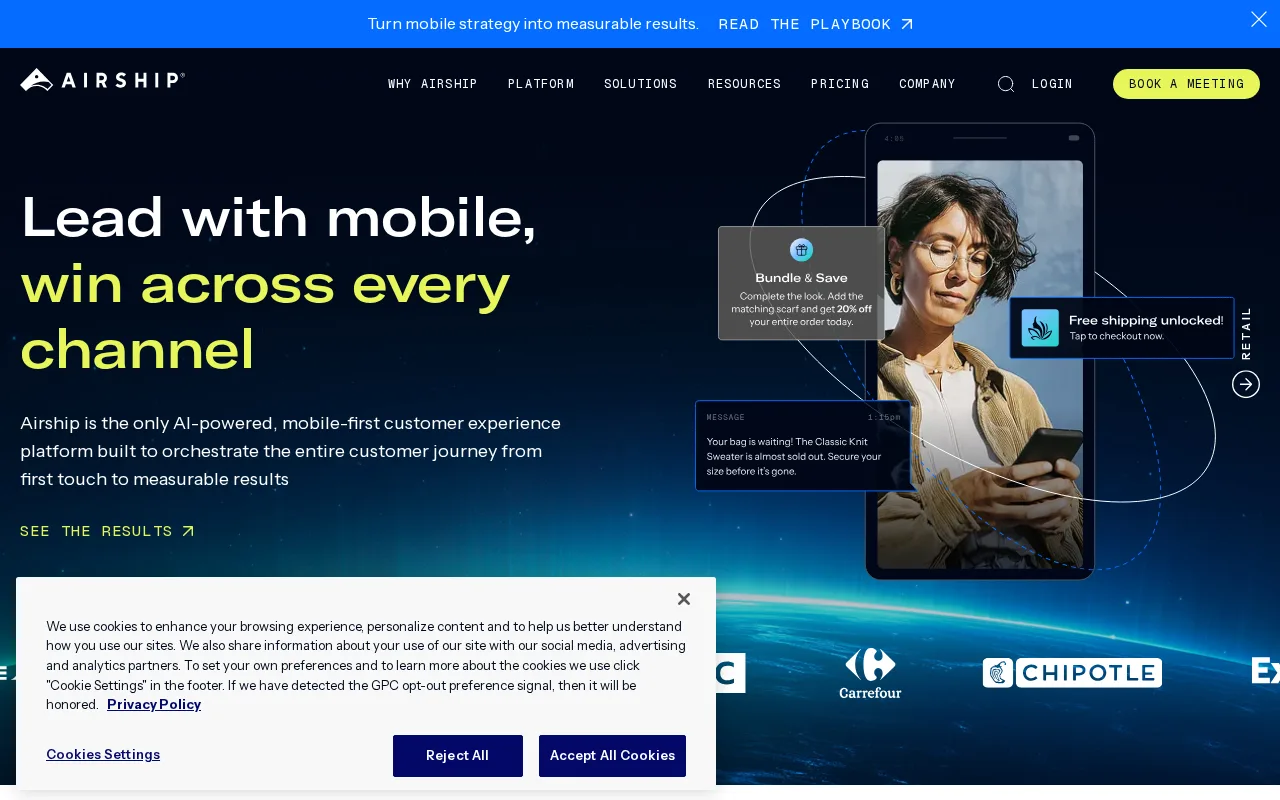
- Airship is a platform for delivering personalized push notifications and in-app messaging to mobile app users.
- How much does it cost?
- Airship offers a free tier with basic features; paid plans with advanced capabilities require contacting sales.
- Does it have a free plan?
- Yes, Airship provides a free plan with limited messaging features.
- What integrations does it support?
- Integration details are limited; Airship focuses primarily on mobile messaging channels.
- Who is it best for?
- It is best suited for product managers and marketers focused on mobile user engagement.
- What is this tool?
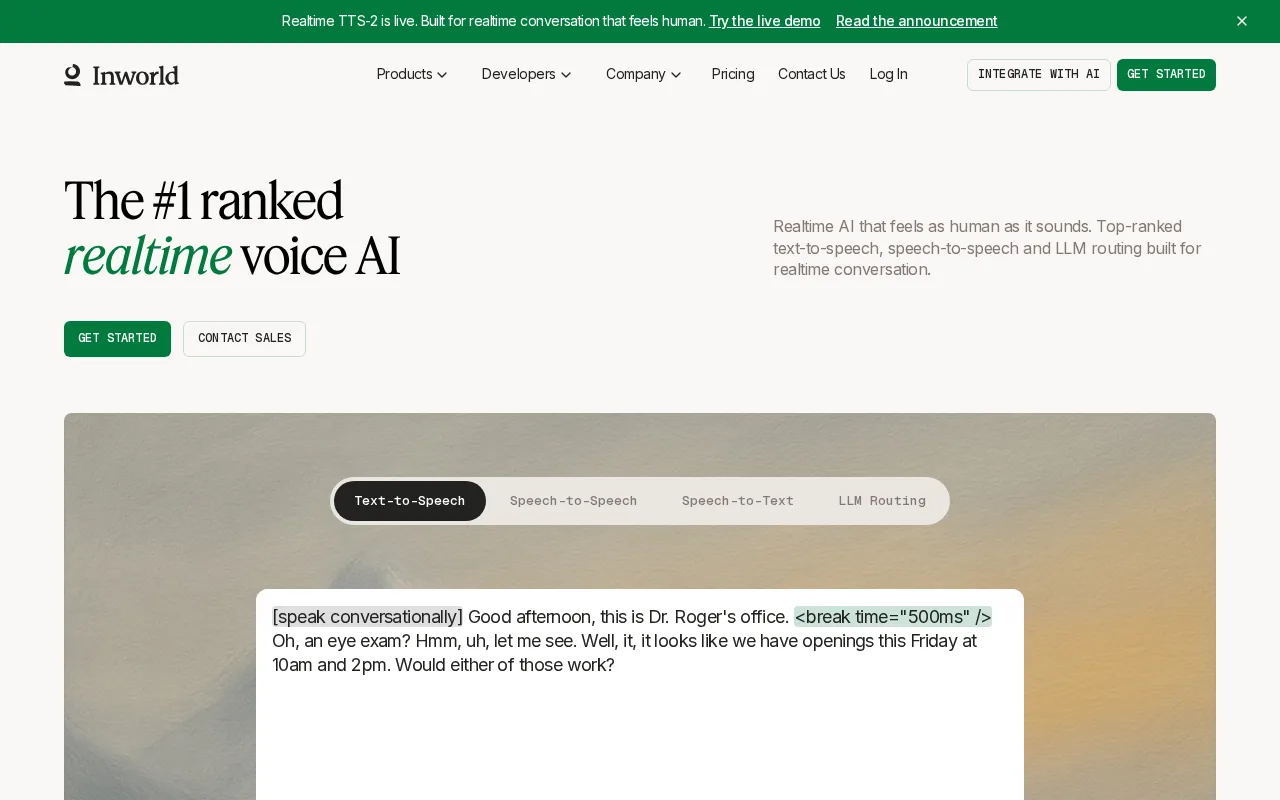
- Inworld is a platform for creating AI-powered game characters and dynamic narratives.
- How much does it cost?
- Inworld offers a free tier with basic features; paid plans unlock advanced capabilities.
- Does it have a free plan?
- Yes, a free plan is available for individuals to try core AI character features.
- What integrations does it support?
- Inworld provides SDKs for game engines but does not list third-party integrations publicly.
- Who is it best for?
- Game developers and studios focused on immersive AI-driven storytelling.
| Info | Airship | Inworld |
|---|---|---|
| Pricing | Freemium | Freemium |
| Category | Gaming, Esports & Sports Analytics | Gaming, Esports & Sports Analytics |
| Deployment | Cloud | Cloud |
| Learning Curve | — | Intermediate |
| Free Plan | ✓ | ✓ |
| AI Agent | ✓ | ✗ |
| Autonomy | Assistant | Assistant |
| Risk Tier | Medium | Low |
 GameScout AI
 Promethean AI
 FanAI
FanAI BioCatch
 WeatherForecastAI
Inworld (5.2) and Airship (5.2) score within our confidence interval — treat this as a tie for practical purposes. Pick based on the specific dimensions that matter to your workflow.
ⓘ How Volvenix scores work
Scores are computed by Volvenix — not supplied by the vendors, and not third-party benchmark results. Each 0–10 dimension (Overall, Features, Usability, Support, Pricing) is a directional estimate aggregated from catalog signals — editorial cataloguing, content depth, engagement, and provider-reputation indicators — so treat them as a starting point, not a lab result.
Confidence reflects how complete the underlying data is for both tools; lower confidence means fewer signals were available, not a worse tool. We never accept payment for rankings or scores. More about how Volvenix works →